How Long Does It Take to Become a Dental Assistant? A Week-by-Week Look at 10-Week Training
Ten weeks sounds short. And honestly, when you first hear it, it’s natural to wonder whether ten weeks is actually enough time to learn something as important as dental assisting.
It is — but only if the program is designed well. The difference between a 10-week program that actually works and one that cuts corners comes down to how those weeks are structured. Here’s what Arch’s 10 weeks actually looks like, broken down so you can picture yourself in it.
Before week one: what to expect at enrollment
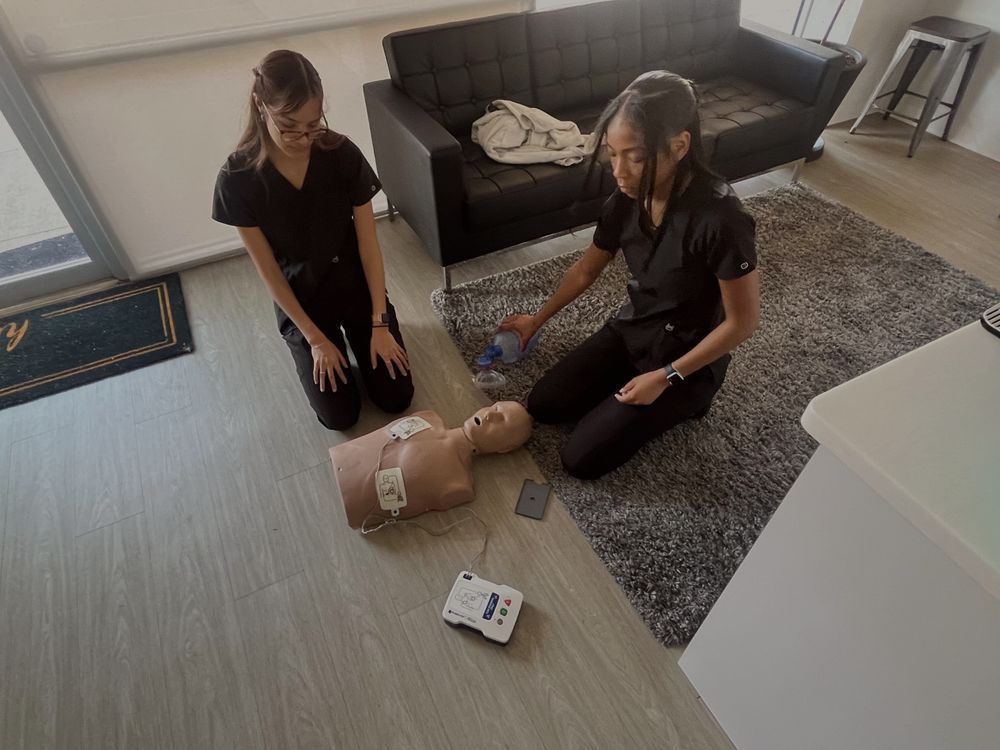
Before the program begins, you’ll receive your take-home lab kit. This includes the instruments and supplies you’ll use to practice clinical skills throughout the program — an unusual detail that most programs don’t offer. Most schools wait until the in-person days for any hands-on work. Arch gives you tools from day one so practice can happen continuously, not just during scheduled lab sessions.
You’ll also get access to the online learning platform, meet your assigned instructor, and get your schedule for the live Saturday sessions and in-person lab weekends.
Weeks 1–3: foundational knowledge online
The first three weeks are primarily online — a mix of self-paced coursework and live instructor-led sessions on Saturdays. This phase covers the core knowledge every dental assistant needs:
- Dental anatomy: tooth numbering systems, surface names, root structure, the relationship between teeth and surrounding bone
- Dental terminology: the language of clinical dentistry — procedures, instruments, materials, conditions
- Infection control: sterilization protocols, PPE, OSHA compliance, cross-contamination prevention
- Dental radiography fundamentals: radiation safety, technique basics, positioning (preparation for X-ray certification)
- Dental materials: impression materials, bonding agents, cements, temporary materials — what they are and when they’re used
- Medical history and patient intake: how to collect and flag health history information before procedures
The online format makes this phase flexible — you can work through content on your own schedule, with Saturday live sessions keeping the cohort connected and giving you direct access to your instructor for questions.
Week 4: first in-person lab weekend (days 1–2)
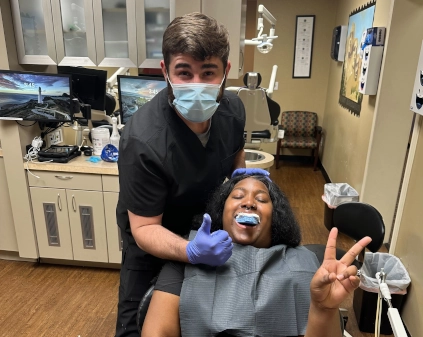
Week 4 is the first of two in-person lab weekends. Each lab day runs approximately 9 hours, and they take place inside a real, working dental office through Arch’s partnerships with local dental practices.
This isn’t a classroom simulation. You’re in an actual operatory, using actual instruments, learning from a working dental professional in the space where these procedures happen every day.
Lab weekend 1 focuses on:
- Instrument identification and setup: learning to tray up instruments for specific procedures, ergonomics and efficiency
- Chairside assisting technique: positioning, four-handed dentistry, anticipating the dentist’s next step
- Dental radiography (hands-on): technique practice, positioning, exposing images — working toward X-ray certification competency
- Moisture control: isolation techniques, dental dams, high-volume evacuation
- Patient communication: how to talk with patients before and during procedures, managing anxiety, building rapport
By the end of lab weekend 1, the transition from theory to practice has happened. You’ve touched the instruments. You’ve sat chairside. You know what the work actually feels like.
Weeks 5–7: intermediate skills and specialty procedures
Back to the online platform for weeks 5–7, building on the clinical foundation from lab weekend 1. This phase goes deeper into procedure-specific knowledge and specialty areas:
- Restorative procedures: amalgam and composite restorations, matrix placement, curing protocols
- Dental impressions and models: alginate impressions, bite registrations, pouring and trimming models
- Temporary crowns and provisional restorations: fabrication, cementation, patient instructions
- Orthodontic assisting basics: bracket placement, wire management, appliance delivery
- Oral surgery assisting: extractions, suture placement, post-operative care instructions
- Pediatric dentistry: working with young patients, behavior management strategies
- RDA exam preparation: targeted content review, practice questions, exam format overview
Saturday sessions during this phase often include case reviews and Q&A focused on procedural understanding — connecting the online content to what you practiced in lab weekend 1.
Week 8: second in-person lab weekend (days 3–4)
The second lab weekend runs the same format — two days, approximately 9 hours each, inside a real dental office. But the complexity level steps up significantly.
Lab weekend 2 focuses on:
- Advanced chairside techniques: working on more complex procedure simulations with faster instrument exchanges
- Expanded function skills: coronal polishing, sealant application, and other RDA-level expanded duties (state-specific)
- Radiography refinement: additional X-ray technique practice toward competency sign-off
- Proficiency evaluations: your instructor assesses clinical readiness across key skill areas
- Professional standards in practice: reviewing real-world scenarios, documentation, charting
By the end of lab weekend 2, you’ve had four full days of hands-on work in real dental offices. That’s not nothing. Most clinical dental programs count contact hours — Arch’s four lab days represent approximately 36 hours of direct clinical training, all in active practice environments.
Weeks 9–10: final exam prep and program completion
The last two weeks are focused on consolidation, review, and exit readiness.
- Comprehensive content review: full curriculum review tied to RDA exam domains
- Practice exams and skill assessments: working through practice questions under exam conditions
- Career readiness content: resume guidance, interview preparation, what to expect in your first dental assistant role
- Program completion: students who successfully complete all program requirements receive their certificate of completion
The RDA exam itself is taken after program completion — Arch’s curriculum is aligned to RDA exam content so graduates walk in with strong preparation.
The total timeline: start to first paycheck
Here’s what the full journey from “I’m interested” to “I’m employed” typically looks like:
| Phase | Estimated timeframe |
|---|---|
| Enrollment to program start | 1–3 weeks |
| Program (10 weeks) | 10 weeks |
| RDA exam prep + scheduling | 2–4 weeks post-program |
| Job search and hiring | 2–6 weeks |
| Total: start to employment | Approximately 4–5 months |
That’s roughly one semester at a traditional college — and you’re done, certified, and employed.
Why the format matters as much as the length
Ten weeks works at Arch because of how those ten weeks are structured. Online-first design removes the commute burden and makes it possible to work through coursework on your schedule. In-person lab days are concentrated and high-impact — 36 hours of real clinical training, not spread thin across months of weekly 2-hour labs.
Most traditional dental assistant programs stretch across 9–12 months not because students need that long to learn the material, but because programs are built around semester schedules, registration periods, and course sequencing requirements. The 9-month timeline serves the institution. The 10-week timeline at Arch was designed to serve the student.
What happens if you fall behind?
Life happens. Arch’s online format gives flexibility — if a week is harder than expected, you can pace coursework accordingly. Instructors are available during live Saturday sessions and through direct communication for students who need support. The small cohort model (fewer students per instructor) makes it easier to get individual attention when you need it.
The in-person lab days have fixed schedules, but the online portions are flexible enough to accommodate the realities of adult learners who may have jobs, families, or other commitments.
What if you already have some healthcare experience?
Some students come to Arch with a background in medical assisting, CNA work, phlebotomy, or general healthcare. The curriculum still starts from the dental foundation — dental anatomy, dental materials, and dental-specific protocols are specialized enough that healthcare experience in another field doesn’t replace them.
That said, students with healthcare backgrounds typically find the infection control, patient communication, and clinical workflow content more familiar. The learning curve during lab weekends tends to be shallower. If you’re making a lateral move from another clinical field, 10 weeks is still the appropriate investment — you’re learning dental-specific skills, not general clinical ones.
What if you have no healthcare experience at all?
Then Arch was built for you. No prerequisites, no required background, no experience needed. The online-first design means you control the pace of content delivery — if dental anatomy is new territory, you can spend more time with it before moving forward. The live Saturday sessions give you direct access to instructors to fill in gaps.
Most Arch students are career-changers with no healthcare background. The program is structured around that reality.
Ready to see the full program?
If you want to understand exactly what the program covers, what the cost looks like with payment plan options, and how enrollment works, the program details page has the full breakdown. And if you’re not sure whether there’s an Arch location near you, the locations directory lists every active campus.
Ten weeks is a real commitment. But it’s also ten weeks to a certification, a career, and a paycheck — with zero debt at the finish line.
Salary data sourced from the Bureau of Labor Statistics (BLS.gov, 2026) and Glassdoor salary data for dental assistant roles.
You're only a few months from the medical assistant career you deserve.