School for Dental Assistant: 6 Questions to Ask Before You Enroll
Finding a school for dental assistant training doesn’t take long — a quick search turns up dozens of options. Community colleges, career schools, hybrid programs, fully online certificates, weekend accelerated formats. They all claim to prepare you for a dental career.
What most of them don’t tell you upfront is how different their outcomes actually are.
The school you choose affects how prepared you feel on day one of the job. It affects whether you’re carrying debt when you graduate. It affects whether you’re eligible for certification. It affects how quickly you find employment.
Here are six questions worth asking before you hand over a deposit.
1. Where does hands-on training actually happen?
This is probably the most important question — and it’s the one schools answer least clearly in their marketing materials.
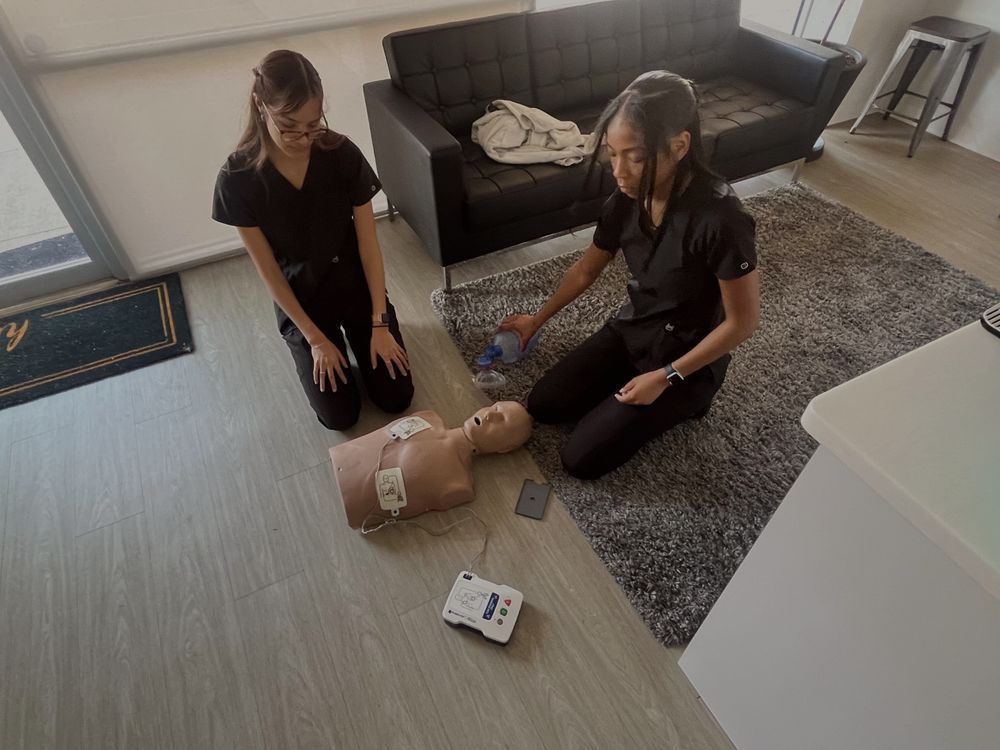
Dental assisting is a clinical skill. Infection control, radiography, four-handed assisting, instrument exchange, patient communication — you can’t learn any of these by watching videos. At some point you have to sit chairside with a real dentist in a real clinical environment and do the work.
Programs differ dramatically on this:
Classroom labs: The most common setup. The school has a simulated operatory with mannequins, models, or typodont teeth. You practice on simulated patients with no patient flow, no real clinical pressure, and no exposure to the variables of actual dental practice — different patient anatomy, equipment variability, procedure complications.
School-based clinical clinics: Some larger programs have an on-site dental clinic where students treat actual patients under supervision. Better than a mannequin, but still a campus environment, not a working dental practice.
Real dental offices: A small number of programs — Arch among them — place students inside active, working dental practices for their hands-on training. You’re learning in the same environment where you’ll eventually be employed. Real patients, real equipment, real procedure flow, real professional expectations.
The distinction matters. When you complete a program and apply for jobs, the first question a dental office manager asks is whether you’ve worked in a real dental environment. The answer to that question is very different depending on which type of program you completed.
2. What is the total cost — and what will you owe at graduation?
“Tuition” is not the same as “total cost.” And “total cost” is not the same as “what you’ll owe when you graduate.”
Dental assistant programs range from under $3,000 to well over $15,000. And the payment structure matters as much as the amount. A $5,000 program paid entirely through student loans leaves you with debt, interest, and monthly payments before your first paycheck clears.
Questions to ask:
- What’s the all-in cost including materials, lab fees, exam prep fees, and any other charges?
- Does the school accept federal financial aid — and if so, does that mean you’re encouraged to take loans?
- What are the payment plan options for paying out of pocket without loans?
- What is the expected debt at graduation for a typical student?
Arch keeps total cost at $2,950 and offers flexible weekly payment plans so students can pay as they go. No financial aid is accepted by design — this is a deliberate choice to keep costs low and keep students out of debt. Graduates leave with a certification and a zero balance.
That’s not the norm. It’s worth asking the question explicitly at any school you’re considering.
3. How long is the program — and is that honest?
Program length claims deserve scrutiny.
A “12-week program” might mean 12 weeks of online content followed by a 3-month externship that isn’t included in the advertised timeline. A “fast-track” program might be fast on paper but slow in practice if it runs one day per week.
Ask specifically:
- How many total hours is the program (contact hours + self-study)?
- Is an externship required, and if so, how long is it — and is it counted in the advertised duration?
- What’s a realistic estimate for start-to-employed, including any post-program requirements like board exams?
Arch’s 10 weeks is 10 focused weeks of dental assistant training. Two in-person lab weekends (4 days, approximately 9 hours each) inside real dental offices. Online coursework and live Saturday sessions in between. The program is designed to move quickly without padding.
From enrollment to first job, the full timeline typically runs 4–5 months — including exam prep and job search. That’s transparent and fast.
4. Does the program prepare you for RDA certification?
Not all dental assistant programs are aligned to certification exams. Some focus on general training without specific exam prep. Others claim to prepare you for certification but don’t cover the required content systematically.
Registered Dental Assistant (RDA) certification is the credential that unlocks higher pay, expanded-function duties, and better job options in most markets. Without it, you’re competing for entry-level positions as an uncertified DA. With it, you’re eligible for roles that pay meaningfully more.
Ask the school directly:
- Is the curriculum aligned to RDA exam content?
- Is exam prep included in the program, or is it an add-on?
- What’s the program’s pass rate on the RDA exam?
Arch builds RDA exam preparation into the standard curriculum. Graduates take the exam after completing the program and enter the workforce with the credential.
5. What is the student-to-instructor ratio?
Small cohorts make a meaningful difference in outcomes. If an instructor is managing 40 students, the level of individual feedback and hands-on attention each student gets is fundamentally limited. This is especially true for clinical skills, where technique matters and errors in practice become habits.
Ask:
- How many students are in a typical cohort?
- What is the ratio of students to instructors during in-person lab sessions?
- How accessible is the instructor for individual questions outside of scheduled sessions?
Arch’s programs are designed for small cohort sizes, with direct instructor access through live sessions and ongoing communication. The online-first format doesn’t mean “no instructor access” — it means flexible, responsive instruction built around students’ actual schedules.
6. What do graduates do after completing the program?
Employment outcomes are the measure that matters most — and they’re the least standardized metric in vocational education. A school can claim “high job placement rates” without defining what counts as placement, how long after graduation they measure it, or what type of employment is included.
Better questions to ask:
- What types of jobs are graduates getting — general dentistry, specialty, front desk?
- How quickly after graduation are students typically employed?
- What does the school do to support job placement — career services, job boards, employer relationships?
Graduates from Arch’s program are eligible for chairside assistant roles, RDA positions, and specialty dental settings immediately after certification. The hands-on training in real dental offices means graduates have real clinical references and practical experience to discuss in interviews.
A note on accreditation for dental assistant programs
Dental assistant programs don’t require institutional accreditation in the same way that dental hygiene programs do. There is no national body that mandates accreditation for dental assistant training — which means programs vary widely in quality, and accreditation status alone isn’t a reliable quality signal.
What matters more than accreditation: Does the program prepare you for RDA certification? Does training happen in real clinical environments? What do outcomes look like for graduates?
Some community colleges offer dental assistant programs through their accredited institutions — and that can add credibility. But a shorter, non-accredited vocational program can absolutely produce better-prepared graduates than a longer accredited program, depending on how it’s structured. Don’t use accreditation as a proxy for quality. Use the six questions above instead.
Red flags to watch out for
A few things to notice when researching programs:
- Vague language about hands-on training (“clinic hours” or “lab component” without specifics about where or how) — ask directly where training takes place
- Upfront pressure to apply for financial aid — programs that encourage loans before you’ve asked about payment plans may not have your financial interests in mind
- No mention of RDA exam or certification — if certification prep isn’t explicitly part of the curriculum, ask whether it’s included
- Very long programs with thin clinical components — more weeks doesn’t mean more clinical exposure if most of that time is general education content
Putting it together
Choosing a school for dental assistant training isn’t just about cost or location or program length — though all three matter. It’s about whether the program delivers actual preparation for the job you want to do.
The answers to these six questions will tell you more about a program than any marketing materials will. Ask them at every school you’re evaluating.
For a transparent breakdown of what Arch’s program includes, how it’s structured, and what it costs, the program details page is the right starting point. And if location is a factor, check the Arch locations directory to find a program near you.
No experience required. No debt at graduation. Ten weeks to a certification.
Salary and employment data sourced from the Bureau of Labor Statistics (BLS.gov, 2026) and Indeed salary estimates for dental assistant roles.
You're only a few months from the medical assistant career you deserve.