Trade Schools Near Me for Dental Careers: Is Dental Assisting the Right Path?
Most people who search for trade schools are asking a pretty practical question: what’s the fastest way to get trained, get certified, and get paid? The healthcare trades tend to offer a solid answer to that — and dental assisting, in particular, is one of the better-kept secrets in the vocational space.
Here’s an honest look at what trade school options exist for dental careers, how they stack up, and what makes Arch’s approach different from a traditional vocational program.
What counts as a “trade school” for dental careers?
Trade schools — also called vocational schools, career colleges, or technical institutes — focus on job-ready training rather than academic degrees. You learn what you need to do the job, and you get in and out quickly.
For dental careers, there are a few different paths that fall loosely under the “trade school” umbrella:
Dental assistant programs
- Duration: 10–14 weeks (accelerated) to 9–12 months (traditional)
- Format: In-person, online, or hybrid
- Cost: $2,000–$15,000 depending on school and format
- Outcome: Job-ready dental assistant, RDA exam eligibility
Dental lab technician programs
- Duration: 1–2 years
- Format: Primarily in-person (hands-on lab work required)
- Cost: $10,000–$30,000+
- Outcome: Dental lab technician role (fabricating crowns, dentures, appliances)
Dental billing and coding
- Duration: A few weeks to a few months
- Format: Mostly online
- Cost: $500–$3,000
- Outcome: Front-desk administrative role (no chairside clinical work)
Dental hygiene (not really a trade program)
Worth mentioning: dental hygiene requires an Associate of Applied Science degree from an accredited institution. It’s a 2–3 year commitment with costs in the $20,000–$60,000 range — closer to a community college degree than a trade program. Not the same category.
Why dental assisting stands out in the healthcare trades
Dental assisting hits a sweet spot that’s harder to find in other trades:
Fast entry. Accelerated programs like Arch can take you from zero to job-ready in 10 weeks. Compare that to nursing (2–4 years), dental hygiene (2–3 years), or even many medical assistant programs (4–6 months).
Real clinical skills. You’re not doing data entry or administrative work — you’re working chairside with a dentist, taking X-rays, assisting with procedures, managing instruments, and interacting with patients every day. The work is technical and hands-on.
Consistent job demand. According to the Bureau of Labor Statistics, dental assistant employment is projected to grow 7–8% through 2033 — faster than average for all occupations. Dental offices are always hiring, and turnover creates openings constantly.
Salary that makes sense at $3k training cost. Dental assistants earn $38,000–$52,000/year nationally (BLS, 2026). With a training investment of under $3,000 and no debt, that salary starts looking strong very quickly. The return on investment is hard to beat.
What to look for when comparing trade schools for dental assisting
Not all programs are equal. Here’s what matters when you’re evaluating your options:
1. Where does hands-on training happen?
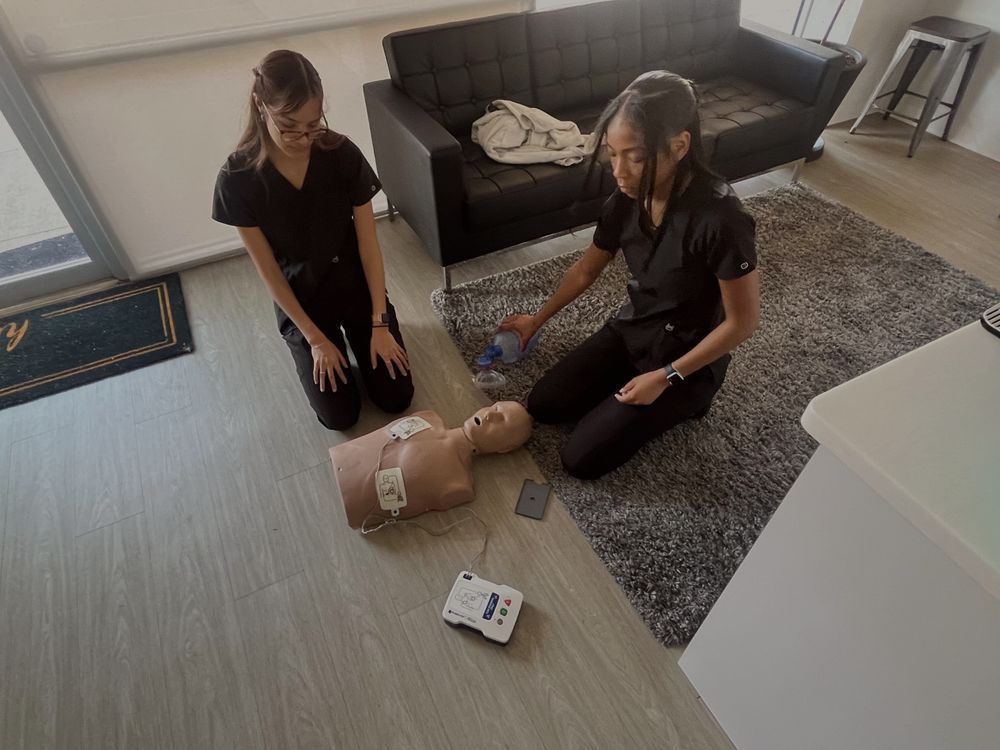
Some programs teach in classroom labs with mannequins and simulated setups. Others — like Arch — place you directly in real, working dental offices. That difference matters when you walk into your first job. If you’ve only practiced on a mannequin, you’re learning on the job. If you’ve already worked alongside a real dentist in a real office, you show up ready.
2. How long is the program, and is that honest?
Some programs advertise “4-week” training but mean 4 weeks of online content, followed by months of externship. Others say “6 months” but much of that is general education courses that don’t prepare you for the clinical work. Arch’s 10 weeks is 10 weeks of focused dental assistant training — online coursework, live Saturday sessions, and 4 full lab days in real dental offices.
3. What’s the total cost — and what’s your debt at graduation?
Program cost matters, but debt at graduation matters more. A $10,000 program paid through loans leaves you with a monthly payment before you’ve earned your first paycheck. Arch’s model is designed around a $2,950 total cost with flexible payment plans so students graduate with no debt. That was a deliberate design choice, not a happy accident.
4. Does the program prepare you for certification?
RDA certification (Registered Dental Assistant) is the credential that unlocks higher-paying roles and expanded-function duties in many states. Look for programs that include exam preparation as part of the curriculum, not as an add-on.
How Arch fits into the trade school landscape
Arch isn’t positioned as a traditional trade school — it’s structured more like an accelerated professional training program. But it delivers exactly what trade school students are looking for: fast, affordable, job-ready training in a field with strong employment demand.
A few things that set Arch apart:
Online-first design. Most coursework is delivered online, which means you’re not commuting to a campus every day. Live Saturday sessions with instructors keep the learning interactive without requiring you to rearrange your whole schedule.
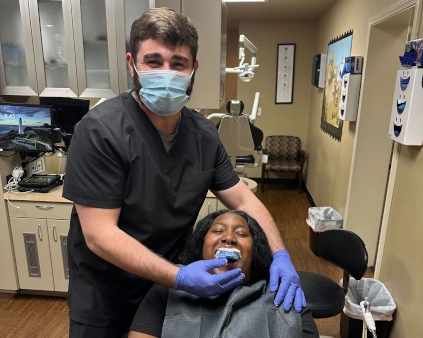
Real dental offices, not classroom labs. Arch’s hands-on lab days take place inside actual working dental practices through partnerships with local dentists. You’re learning in the environment you’ll actually be working in.
Take-home lab kits. Students receive lab kits to practice clinical skills at home between in-person sessions — an unusual feature that reinforces hands-on competency throughout the program, not just during lab days.
Nationwide locations. Arch has locations across the country, so if you’re searching for trade schools near you, there’s a solid chance a program is accessible in your area. You can check available locations at /all-locations/.
What graduates do after Arch
After completing the 10-week program and passing the RDA exam, Arch graduates are eligible for:
- Chairside dental assistant roles in general dentistry practices
- Specialty assistant positions in orthodontics, oral surgery, pediatric dentistry, and periodontics (which pay above the general DA median)
- Expanded-function dental assistant roles in states where RDA certification unlocks additional clinical duties
- Lead dental assistant positions after gaining experience
Many graduates are employed within 1–3 months of completing the program. Dental offices hire regularly, and a candidate with RDA certification and real-office training experience stands out from the applicant pool.
Common concerns about trade school training — and honest answers
“Will employers take a trade program seriously?”
In dental assisting, employers care about two things: certification and clinical readiness. If you have your RDA credential and you’ve trained in a real dental office, hiring managers don’t ask whether you got there in 10 weeks or 10 months. The credential is the credential.
“Is a shorter program less respected?”
Not in dental assisting. The RDA exam is the same regardless of how long your program was. A 10-week graduate who passes the exam and trained chairside in a real practice is just as credentialed as a 12-month graduate who did the same.
“What if I don’t have any healthcare background?”
Arch’s program assumes no prior experience. The online curriculum starts from the ground up — dental anatomy, terminology, protocols — and builds toward clinical competency. The majority of students who enroll are career-changers with no healthcare background. The program is designed for that student.
“What if I can’t afford it even at $2,950?”
The payment plan option exists for exactly this reason. Weekly auto-draft payments spread the cost across the 10-week program so there’s no large lump-sum requirement at enrollment. The goal is that financial pressure doesn’t prevent someone from getting started.
Is trade school the right fit for you?
Trade school isn’t for everyone — but if you’re motivated by a defined skill set, a faster path to employment, and a manageable upfront cost, it’s often the smarter choice over a 2–4 year degree for careers that don’t require one.
Dental assisting is one of those careers. You don’t need a bachelor’s degree. You don’t need prerequisite coursework. You don’t need years of healthcare experience. You need solid training, clinical exposure, and a certification that proves your skills.
Arch’s 10-week program was built for exactly that. No fluff, no filler. Just the training you need to get to work.
If you’re ready to look into it, learn more about the program details. And if you want to find a location near you, check out Arch’s location directory.
Salary data sourced from the Bureau of Labor Statistics (BLS.gov, 2026) and Indeed salary estimates for dental assistant roles.
You're only a few months from the medical assistant career you deserve.