What Do Dental Assistants Do? A Real Look at the Day-to-Day Job

Before anyone commits to dental assistant training, they want to know what the job actually looks like. Not the sanitized bullet points from a job posting, but what a real workday involves — what you’d be doing at 9am, at noon, and at 4pm on a Tuesday in a busy general dentistry practice.
This is that picture. Honest, detailed, and connected to what training for the role actually prepares you for.
The short version first
Dental assistants work alongside dentists and dental hygienists to make clinical procedures run smoothly. You’re a key part of the clinical team — not front desk, not reception, but in the back, in the operatory, working chairside with patients and providers on procedures throughout the day.
The work is hands-on, fast-paced, and requires both clinical knowledge and patient communication skills. It’s physically active (you’re on your feet, moving between patients) and mentally engaging (each procedure is different, each patient is different).
Most dental assistants in general practice handle 8–15 patients per day across a mix of procedures — check-ups, fillings, extractions, crowns, root canals. The variety is part of what makes the job interesting for most people who do it.
What dental assistants do: the full breakdown
Before the patient sits down
The assistant’s day starts before the first patient arrives. Before each procedure, the dental assistant:
- Reviews the patient’s chart and treatment plan to understand what procedure is scheduled and any relevant medical history flags
- Sets up the operatory: adjusts the chair, positions the bracket tray, places the appropriate instruments and materials for the procedure
- Prepares the procedure tray: selecting and arranging instruments in procedural order (tray setup is a skill that takes training — the right instrument in the right sequence saves the dentist time)
- Mixes or prepares any materials needed for the procedure — cements, bonding agents, impression materials, temporary materials — depending on what’s been planned
This pre-procedure setup is invisible to patients but significant to efficiency. A well-prepared operatory means a smoother procedure. A poorly prepared setup creates delays and stress.
During the procedure
This is the core of what dental assistants do — chairside assistance. Four-handed dentistry is the standard: the dentist uses both hands, the assistant uses both hands, and the two work in coordinated sequence to complete the procedure efficiently.
What that looks like in practice:
Instrument exchange: Passing instruments to the dentist in a precise, choreographed sequence — pick-up, pass, return — without breaking the flow of the procedure. Getting this wrong slows things down. Getting it right becomes nearly automatic with experience.
High-volume evacuation (HVE): Using the suction to keep the patient’s mouth clear — controlling moisture, clearing debris, maintaining visibility for the dentist. This sounds simple. In practice, it requires positioning, timing, and constant adjustment.
Moisture control and isolation: Placing cotton rolls, dental dams, retraction cord — keeping the working area isolated and dry.
Radiography (X-rays): Taking dental X-rays is a standard part of the dental assistant’s role. Positioning the sensor, directing the X-ray head, exposing the image, processing and confirming image quality. In many states, dental assistants need a specific certification to expose radiographs — Arch includes X-ray certification preparation in the curriculum.
Material preparation: Mixing impression materials, temporary cements, bonding agents as directed. Timing and consistency matter here — some materials have narrow working windows.
Retraction and visibility: Using retractors and mirrors to maintain the dentist’s sightlines throughout a procedure.
Patient communication during the procedure: Checking in on the patient’s comfort, explaining what’s happening (“you may feel some pressure here”), managing anxiety. Patients often find the dental assistant easier to talk to than the dentist, and the assistant becomes the patient’s primary point of contact during a procedure.
After the procedure
When the dentist leaves the room, the dental assistant:
- Gives post-procedure instructions: explaining what to expect after a filling, extraction, or other procedure — when to eat, what to avoid, what’s normal versus concerning
- Removes instruments and clears the tray: collecting contaminated instruments for sterilization
- Turns over the operatory: disinfecting all surfaces, replacing barriers, setting up for the next patient
- Sterilizes instruments: running contaminated instruments through the ultrasonic cleaner, packing them, running the autoclave — OSHA-compliant sterilization protocols
- Updates the patient record: documenting what was completed, any patient concerns, follow-up needed
Infection control and sterilization protocols are a significant part of the dental assistant’s daily responsibility. Dental offices operate under strict OSHA guidelines, and the assistant is often the person responsible for maintaining sterilization documentation.
Administrative tasks (in many practices)
In smaller dental practices especially, the dental assistant’s role often bleeds into administrative support:
- Scheduling follow-up appointments at checkout
- Processing treatment plans: explaining next steps and costs to patients
- Managing dental supply orders: tracking inventory, placing orders for clinical supplies
- Taking study models: impressions for orthodontic records, bleaching trays, night guards
The balance between clinical and administrative tasks varies by practice. In large multi-provider offices, there’s usually a dedicated front desk team. In a solo-provider general practice, the dental assistant often wears more hats.
What specialties look like
Dental assistants who work in specialty practices take on more focused but more intensive clinical responsibilities.
Orthodontics: Placing and removing brackets and bands, wire changes, retainer fabrication, managing the chair-to-chair flow of a high-volume patient schedule (orthodontic offices typically see 40–60 patients per day in active treatment).
Oral surgery: Surgical instrument setup, administration support during extractions and implant procedures, monitoring post-procedure recovery, IV sedation monitoring (with additional training).
Pediatric dentistry: Working specifically with children — behavior management techniques, maintaining a calm clinical environment, nitrous oxide setup and monitoring (with certification).
Periodontics: Scaling and root planing assistance, surgical periodontal procedure support, post-surgical care coordination.
Specialty positions typically pay above the general dental assistant median — and they’re accessible to RDA-certified assistants with a few years of general practice experience.
What dental assistants earn
According to the Bureau of Labor Statistics (2026), dental assistants earn:
- National median: approximately $42,000–$48,000/year
- Entry-level (certified): approximately $36,000–$42,000/year
- Experienced / specialty: $48,000–$62,000+/year
Indeed and Glassdoor salary data for dental assistants (2026) shows similar ranges, with higher salaries in metropolitan markets and specialty dental settings.
The career trajectory is real: certified, experienced dental assistants — especially RDAs in expanded-function states — earn meaningfully more than the entry-level median. And because the healthcare employment market is consistently strong, experienced assistants have leverage when negotiating.
What training actually prepares you for this job
The job description above should make clear why dental assistant training matters. This isn’t a role you can pick up in a few hours of shadowing. The clinical skills — instrument exchange, radiography, material handling, four-handed assisting technique — require guided practice in a real clinical environment.
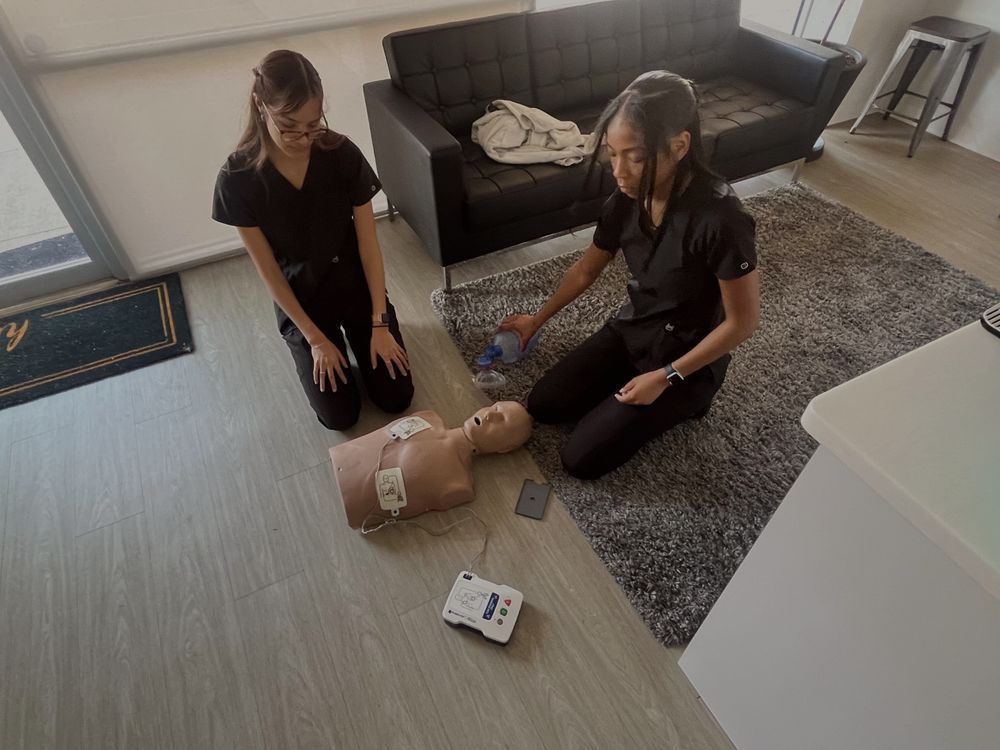
This is exactly why Arch places students in real, working dental offices for their in-person lab days rather than simulated classroom environments. By week 4, students are in an active dental practice, learning to set up trays, work chairside, and handle instruments under professional supervision.
By the time a student completes Arch’s 10-week program, they’ve had:
- Comprehensive online training covering the full scope of dental assistant knowledge
- 4 lab days (approximately 36 hours) of hands-on clinical training in real dental offices
- RDA exam preparation aligned to certification standards
- Hands-on practice with a take-home lab kit throughout the program
That’s a foundation. Not a simulation of one.
Is dental assisting the right fit for you?
Dental assisting tends to attract people who want clinical work without years of prerequisite education, enjoy variety in their daily tasks, find satisfaction in patient interaction, and want to work in healthcare without the debt load of a degree-required profession.
If that describes you, it’s worth looking into seriously. The program details page has everything you need to understand what Arch’s training looks like and what it costs. And if you want to find a location near you, Arch’s locations directory is the place to start.
No prior healthcare experience required. Ten weeks. Under $3,000. Debt-free.
Salary data sourced from the Bureau of Labor Statistics (BLS.gov, 2026), Indeed, and Glassdoor salary estimates for dental assistant roles.
You're only a few months from the medical assistant career you deserve.