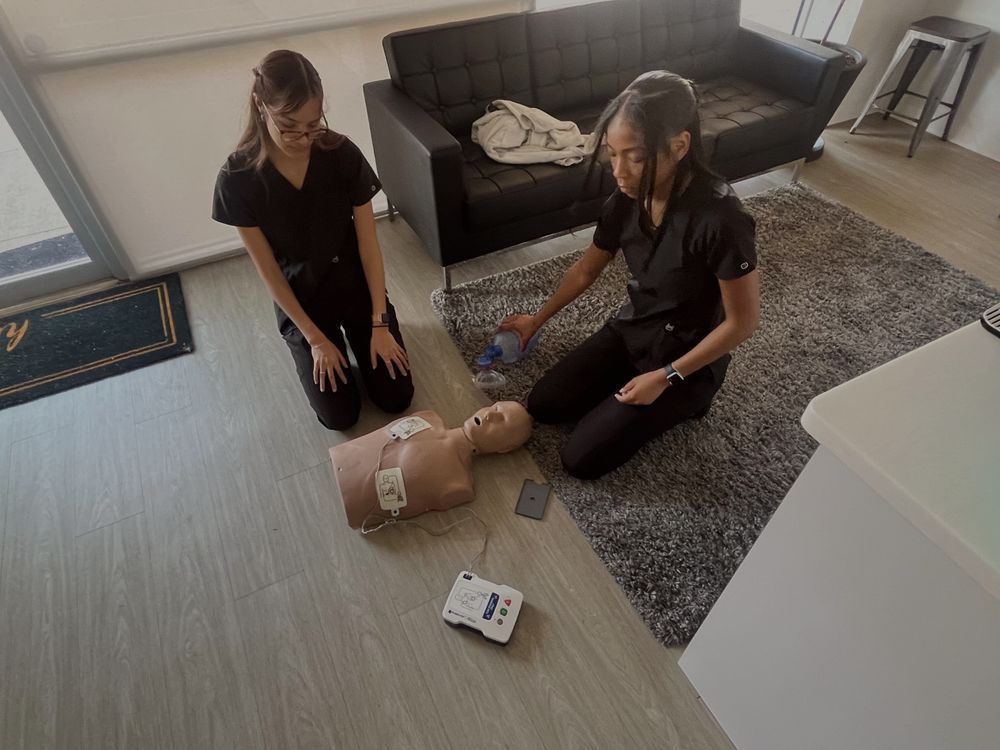
Certified Dental Assistant Program: What RDA Certification Means and How Arch Prepares You

The difference between a dental assistant and a certified dental assistant comes down to one thing: verified proof that you can do the job. Certification tells employers your skills have been independently tested — not just self-reported on a resume.
If you’re evaluating certified dental assistant programs, understanding what certification means, why employers care about it, and how the exam process works will help you choose a program that sets you up for the strongest start.
What is RDA certification?
The Registered Dental Assistant (RDA) is one of the most widely recognized credentials in dental assisting. Requirements vary by state, but the core concept is consistent: you demonstrate competency through a standardized exam administered by a state dental board or national certifying organization.
The certification process:
- Complete an approved dental assistant training program — this establishes eligibility
- Pass a written knowledge exam — covering anatomy, radiography, infection control, materials, procedures, and regulations
- Pass a clinical skills assessment (where applicable) — hands-on demonstration of competency
- Meet state-specific requirements — may include CPR certification or background checks
Once certified, you carry the RDA designation — a credential that carries weight with every employer in the field.
Why certification matters for your career
Employers prefer it — and increasingly require it
When hiring managers choose between two candidates, the one with RDA certification has proven their skills through a third-party exam. That verification reduces hiring risk and speeds up the decision.
It affects your pay
Certified dental assistants consistently earn more:
- Certified RDAs: approximately $46,000–$52,000/year nationally (BLS, Indeed, Glassdoor — 2026 data)
- Non-certified DAs: approximately $38,000–$44,000/year
- Typical premium: $1–$3/hour more, translating to $2,000–$6,000+ per year
Over five years, that premium adds up to $10,000–$30,000 in additional income.
It speeds up hiring
Certified candidates move through the interview process faster. The credential does the skills verification for them.
It gives you mobility
RDA certification is recognized nationwide. If you relocate, your credential follows you.
It opens advancement paths
Certification signals commitment and positions you for lead roles, specialty positions, and management opportunities.
What a quality certified dental assistant program includes
Comprehensive clinical curriculum
The RDA exam tests real skills. Your training should cover:
- Chairside assisting and four-handed dentistry
- Dental radiography — technique, safety, image evaluation
- Infection control and sterilization
- Dental materials — impressions, cements, composites, temporaries
- Patient communication, intake, and aftercare
- Dental anatomy, charting, and terminology
Training in real dental offices
Practicing in an actual dental practice — rather than a classroom lab — builds the kind of confidence and competence that shows in interviews and on the job.
Integrated exam preparation
The best programs build RDA content into every module, so by graduation you’ve been preparing for months — not cramming for days.
X-ray certification preparation
Many states require separate radiography certification. Programs that include this preparation save you time and money after graduation.
Career readiness support
- Resume and interview preparation
- Job search guidance and employer connections
- Ongoing support after graduation
How Arch prepares you for certification in 10 weeks
Exam prep is woven into the curriculum
RDA content isn’t saved for the final week. Every clinical skill you practice, every knowledge module you study, and every lab session you attend directly reinforces what the exam covers.
Training in real dental offices builds exam confidence
The RDA doesn’t just test knowledge — it tests competency. Arch’s 4 in-person lab days in real dental offices ensure you’ve physically practiced every core skill under supervision.
X-ray certification included
Arch’s program includes radiography certification preparation alongside RDA prep — covering both credentials in a single program.
Take-home lab kits reinforce skills
Between lab weekends, practice kits with dental instruments let you build muscle memory at home. Repetition produces confidence, and confidence produces exam readiness.
$2,950 — graduate certified and debt-free
Arch’s tuition covers the full program, including materials and lab access. Weekly payment plans are available. No loans, no financial aid, no debt.
Common concerns about getting certified
“Is the exam hard?” It’s rigorous but achievable with proper preparation. Programs that integrate exam prep throughout produce much higher pass rates than those that don’t.
“How much does the exam cost?” Fees vary by state but are typically a few hundred dollars. Ask whether the training program includes or offsets this cost.
“Do I really need it?” Requirements vary by state. But certified dental assistants consistently get hired faster, earn more, and have stronger career trajectories. The ROI is clear.
The long-term value of certification
- Year 1: Certification helps you get hired faster and often at a higher starting wage
- Years 2–3: Certified assistants are more likely to receive raises and take on expanded responsibilities
- Years 3–5: Positions you for lead roles, specialty practices, and office management
- Years 5+: The credential becomes part of your professional identity
Comparing certified vs. non-certified career paths
The certification premium compounds over time:
Certified RDA path (starting at Arch)
- Training: 10 weeks, $2,950
- Starting salary: approximately $38,000–$42,000/year (certified premium)
- By year 3: approximately $48,000–$54,000/year with raises and experience
- By year 5: lead assistant or specialty roles at $55,000–$62,000+/year
- Total debt: $0
Non-certified / on-the-job trained path
- Training: Informal, varies widely
- Starting salary: approximately $32,000–$36,000/year
- By year 3: approximately $38,000–$44,000/year — slower advancement
- By year 5: Limited access to lead roles and specialty positions
- Certification still required: Many offices eventually require it, meaning you’d need to study and test later
The difference in five-year earnings between these paths can easily exceed $30,000–$50,000, and that gap only widens over a full career.
Who should pursue a certified dental assistant program?
This path makes sense if you:
- Want the strongest start possible — certified candidates get hired faster and at higher wages
- Plan to build a long-term career in dental assisting or use it as a stepping stone
- Prefer proving your skills through a third-party credential rather than hoping employers take your word for it
- Want options — certification gives you mobility across states, practice types, and specialties
- Value a structured training approach over ad hoc on-the-job learning
What makes Arch’s certification program different
Training in real dental offices
Most programs prepare you for certification using classroom labs with mannequins and simulated scenarios. Arch trains you inside actual working dental practices — with real equipment, real instruments, and real clinical workflows. The skills you build are the same skills the exam tests and the same skills you’ll use on the job.
10 weeks, online-first, debt-free
The program is structured for people who need flexibility — live Saturday sessions online, weekday coursework on your own schedule, and in-person labs condensed into just 4 days across 2 weekends. Total cost: $2,950 with weekly payment plans. No loans, no debt.
X-ray certification included
Arch prepares you for both RDA and radiography credentials — so you graduate ready for two certifications, not just one. Many programs charge extra for X-ray certification prep or don’t offer it at all.
No prerequisites
You don’t need college credits, science courses, or any prior healthcare experience. The program is designed for complete beginners.
Nationwide locations
Arch partners with dentists across the country, so there’s likely a training location near you. You train locally, build local connections, and start your career in the market where you want to work.
Get certified through Arch
- Explore the program: Program details
- Review tuition and payment plans: Tuition
- Talk to our team: Contact
- Apply: How to apply
You're only a few months from the medical assistant career you deserve.