Dental Assistant Classes Online: What You Can Learn Remotely (and What You Can't)
The appeal of dental assistant classes online is straightforward: you want a career in healthcare, but your schedule — your job, your family, your life — makes full-time campus attendance impractical. An online option seems like the solution.
The more important question is: what can you actually learn online, and where does online learning hit its limits? Because dental assisting is a hands-on clinical profession, and any honest answer about online training has to address that directly.
Here’s what online learning does well for dental assistants, where it falls short, and how Arch’s hybrid model is specifically designed to solve both sides of that equation.
What dental assistant classes online can genuinely teach you
A significant portion of dental assistant training is knowledge-based — and knowledge-based content transfers effectively to an online format when the instruction is good.
Dental anatomy and terminology
Understanding the structures of the mouth — teeth, periodontal tissue, bone, salivary glands, temporomandibular joint — is foundational. So is learning the vocabulary: universal tooth numbering, tooth surfaces, dental procedure codes, and the terminology providers use in real clinical settings. All of this can be learned effectively online through a combination of lecture, visual aids, and practice assessments.
Radiography theory and safety
The knowledge component of dental radiography — radiation physics, film types and digital sensor systems, radiation biology, protection protocols, and the principles of proper exposure — is taught in the online portion of Arch’s curriculum before students apply it in lab settings. Radiation safety knowledge and ALARA principles are well-suited to online instruction.
Dental materials
Impression materials, bonding agents, composite resins, amalgam (less common now but still used), cements, and temporary materials all have properties, mixing protocols, and clinical applications that can be introduced effectively online. You learn what each material does, why it’s selected for specific procedures, and how it’s prepared — before your hands encounter it in a real office.
Infection control and sterilization protocols
OSHA compliance, HIPAA, bloodborne pathogen standards, PPE requirements, instrument sterilization cycles, and chemical disinfection procedures are largely knowledge-based. They’re also critical — infection control errors have serious consequences. Online instruction allows for thorough coverage and assessment of this content.
Dental pharmacology basics
Common dental medications — local anesthetics, analgesics, antibiotics, anti-anxiety agents — their categories, mechanisms, common side effects, and administration protocols can all be taught online. You won’t administer medications during training, but you need to know them before you walk into a dental office.
Patient communication and administrative skills
Appointment scheduling, insurance verification, treatment plan presentation, patient communication protocols, and EHR documentation are administrative skills that don’t require physical dental equipment. These translate well to online instruction.
OSHA, HIPAA, and compliance training
Regulatory compliance content — which every dental office requires — is standard online learning content. Arch covers this thoroughly in the online curriculum.
What online learning can’t replace
Here’s where honesty matters. No amount of well-designed online content replaces the hands-on practice of clinical skills. These are things you have to do with your hands, with real equipment, in a functional clinical environment:
Chairside assisting — positioning, instrument transfer, suction technique, four-handed dentistry — requires practice alongside a provider with real instruments and real patient setups.
Dental radiography — placing sensors or film in a patient’s mouth, adjusting the tube head, exposing and evaluating the image — is a physical skill that requires supervised hands-on repetition to develop properly.
Instrument sterilization — operating an autoclave, loading and unloading sterilization pouches, inspecting instruments — is a procedural skill that must be practiced in an actual sterilization area.
Tray setup and instrument identification — knowing the names of instruments in a book is different from picking up a cotton plier, elevator, or explorer and using it correctly in a tray setup under time pressure.
Dental materials preparation — mixing alginate for impressions, spatulating cement, loading an impression tray — develops with physical repetition, not visual observation.
Programs that claim to deliver dental assistant classes online with no in-person component are not preparing students for the clinical realities of the job. Employers notice the gap in interviews and, more significantly, in the first week of employment.
How Arch balances online and in-person
Arch’s program is built around a specific insight: most of what you need to know can be taught online, and most of what you need to be able to do must be practiced in person. The program is designed accordingly.
Online-first: the knowledge side
Live online sessions cover dental anatomy, radiography theory, infection control, dental materials, pharmacology, patient communication, OSHA/HIPAA compliance, and administrative procedures. Sessions are instructor-led — not pre-recorded — which means real-time questions, live explanations, and the accountability of showing up for class.
Self-paced coursework fills in between sessions: readings, digital assignments, and knowledge checks that ensure you’re absorbing material before lab days.
4 in-person lab days: the skills side
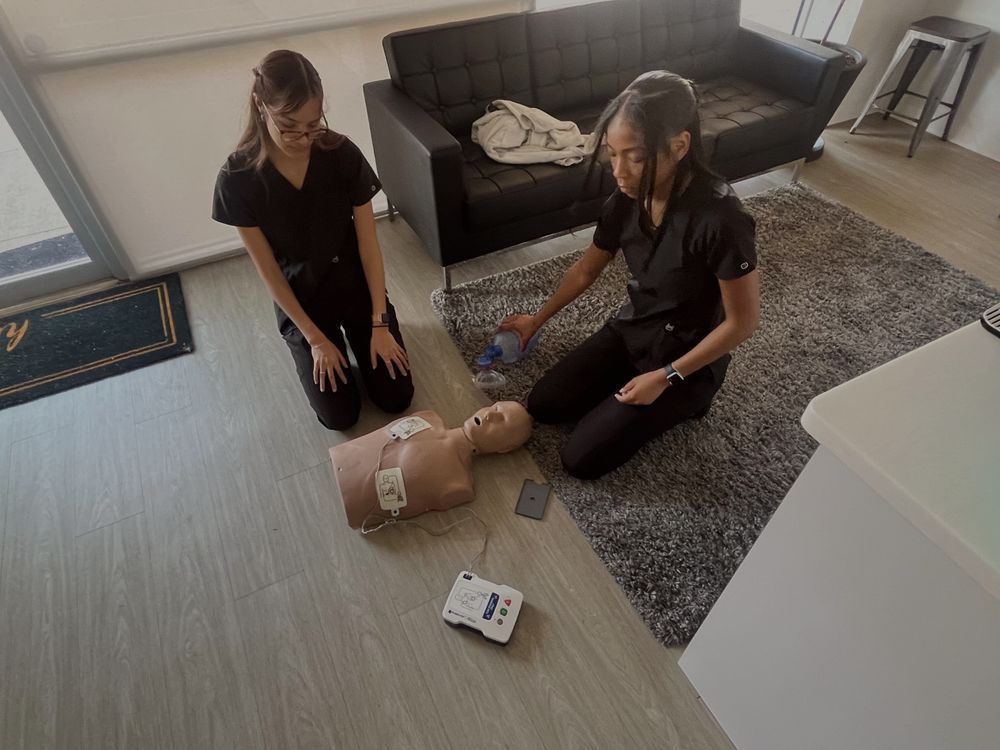
Four full 9-hour lab sessions — across 2 weekends, in weeks 4 and 8 — take place in real partner dental offices, not campus labs. This is where the clinical skills developed in online instruction become physical:
- Chairside assisting positioning and instrument transfer
- Dental radiography: digital sensor placement, tube positioning, image acquisition and evaluation
- Instrument identification and tray setup across major procedure types
- Dental materials mixing and manipulation
- Sterilization procedures and instrument processing
- Patient preparation and draping
- X-ray safety equipment and technique
Practicing in a real dental office — with the actual layout, the real sterilization area, and real clinical instruments — produces graduates who walk into employment already familiar with the environment.
How Arch’s online sessions are structured (not passive video)
One of the most important distinctions in evaluating online dental assistant programs is the difference between asynchronous video content and live instructor-led sessions.
Many programs marketed as “online dental assistant classes” are built around pre-recorded video lectures you watch on your own schedule. These are essentially self-study courses with a digital packaging. You absorb or you don’t — there’s no instructor to ask, no cohort to learn alongside, and no accountability structure other than module completion gates.
Arch’s online sessions are live. Here’s what that means in practice:
Real-time instruction. An instructor teaches each session as a live class, presenting material, walking through clinical scenarios, and demonstrating procedures via video.
Active participation. Students ask questions in real time. If something isn’t clear from a diagram of dental anatomy, you ask — and get an explanation immediately, not after submitting a support ticket.
Clinical scenario discussions. Live sessions regularly include case-based scenarios: “A patient presents with X. What does the DA do first?” These discussions build the clinical reasoning skills that written content alone can’t develop.
Cohort accountability. You’re going through the program at the same time as other students. That shared timeline creates natural accountability and, for most students, is motivating in a way that solo self-study isn’t.
Scheduled structure. The live session schedule gives the program a rhythm. You know when class is. You show up. The structure supports completion in a way that fully flexible, self-paced programs often don’t.
This is not a minor distinction. Students who complete programs with live instruction consistently report higher preparation levels and better retention than those who completed self-paced-only programs.
What this means for your schedule
Arch’s hybrid structure is designed for people with full lives:
- Online sessions: evenings and weekends, live with an instructor
- Self-paced coursework: completed on your schedule between sessions
- Lab days: 4 full-day Saturdays/Sundays, spread across weeks 4 and 8
- No daily campus commute: your weekday schedule remains available
Most Arch students maintain employment throughout the 10-week program. The structure is demanding in terms of engagement and attention — it’s a real program, not a self-study course — but it’s realistic for working adults.
What Arch’s program costs
- Total tuition: $2,950 (all-in, no hidden fees)
- Weekly payment plan: available — no lump sum required
- Debt at graduation: $0
- Financial aid: not accepted by design — this is how the cost stays low
That’s the full cost of an online-first dental assistant program that includes real in-person clinical training, RDA exam preparation, and X-ray certification prep. Under $3,000. Ten weeks. Zero debt.
- See the full program: Program details
- Review tuition and payment plans: Tuition
- Talk to our team: Contact
- Apply now: How to apply
You're only a few months from the medical assistant career you deserve.