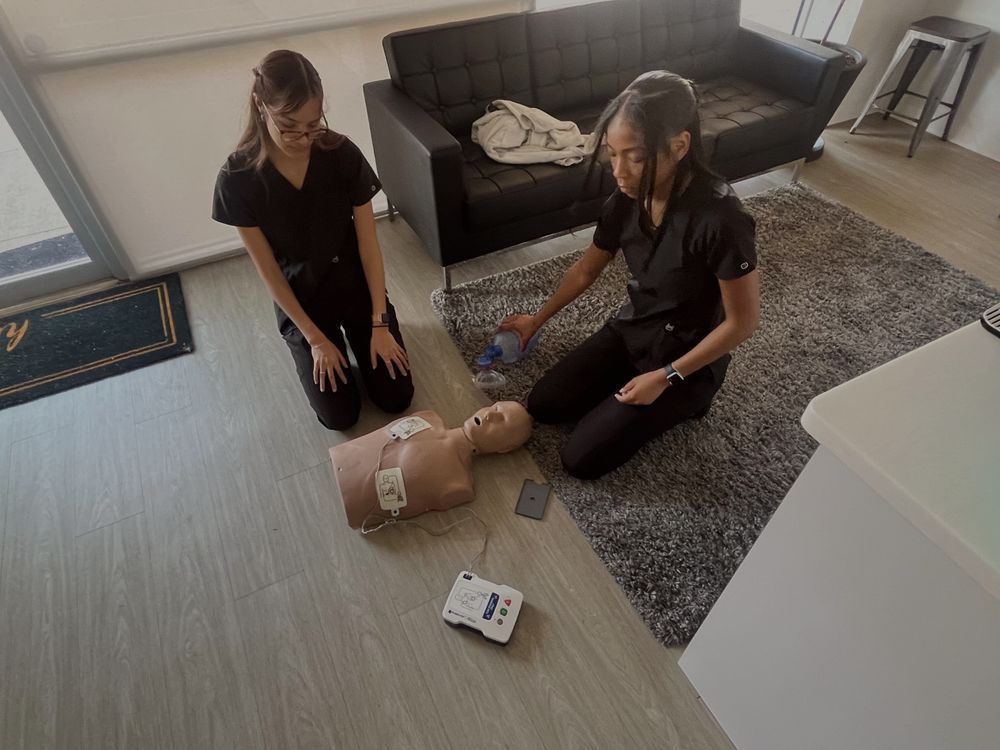
Dental Assistant Programs Online: How to Evaluate Your Options and Find One That Actually Works
There’s no shortage of dental assistant programs online — a quick search brings up dozens of options ranging from $500 self-paced certificates to $10,000+ accredited programs. The variety is overwhelming, and the quality gap between the best and worst options is enormous.
Here’s the thing: not all online programs are created equal, and some of them will leave you with a certificate that doesn’t mean much to employers. This guide will help you understand the different types of online programs, figure out what actually matters, and make a decision you won’t regret.
The three types of dental assistant programs online
Type 1: Fully online (self-paced)
These are the programs you can start anytime and finish whenever you want. They’re usually the cheapest option ($500–$3,000) and the most flexible.
What you get:
- Pre-recorded video lessons
- Quizzes and written assignments
- A certificate of completion
What you don’t get:
- Hands-on clinical practice
- Live interaction with instructors
- Supervised practice with dental instruments or equipment
- Clinical confidence that translates to a real job
The problem: Dental assisting is a hands-on career. You draw blood — er, take X-rays, sterilize instruments, assist during procedures, and work directly with patients. None of those skills can be learned from a laptop. Employers know this, and many won’t hire candidates whose only training was fully online.
Type 2: Online with required externship
Some online programs add a clinical externship requirement — meaning you complete the coursework online and then arrange a certain number of hours at a dental office for hands-on experience.
What you get:
- Online coursework (often self-paced or scheduled)
- A clinical component through an externship placement
Potential issues:
- Finding an externship site can be difficult — many programs leave this responsibility to the student
- Externship quality varies enormously depending on the office and supervising dentist
- The online and in-person components may not be well-integrated
Type 3: Online-hybrid (like Arch)
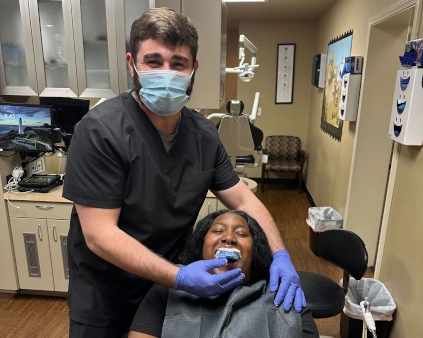
Hybrid programs combine online learning with structured, supervised, in-person clinical training — giving you flexibility without sacrificing the hands-on skills employers expect.
What you get:
- Live, instructor-led online sessions (not pre-recorded)
- Scheduled in-person labs with real equipment and instructor supervision
- Integrated curriculum where online learning and clinical practice reinforce each other
- A structured timeline that keeps you on track
Why it works: You learn the knowledge online and build the skills in person. Both components are designed together, not bolted on as an afterthought.
What to look for when comparing dental assistant programs online
1. Is there a real hands-on component?
This is the most important question. If the program has no in-person clinical practice, you’re not going to be prepared for the job. Ask specifically:
- Where does hands-on training happen?
- How many hours of clinical practice are included?
- Is the training supervised by experienced dental professionals?
- Does the practice happen in a real dental office or just a classroom lab?
2. Are the online sessions live or pre-recorded?
There’s a significant difference between a live, instructor-led session where you can ask questions and interact with classmates versus watching a pre-recorded video at 2 a.m. Both technically count as “online,” but the learning outcomes are very different.
3. Does the program prepare you for a recognized credential?
The Registered Dental Assistant (RDA) credential matters to employers. If the program doesn’t prepare you for the RDA or another recognized exam, your training may not carry the weight you need in the job market.
4. What’s the total cost — everything included?
Online programs love to advertise low tuition and then add fees for materials, lab access, exam prep, technology, and certification exams. Get the all-in number before you compare.
5. Is there career support after graduation?
Online students sometimes feel abandoned after completing their coursework. Look for programs that provide resume help, interview preparation, and job search guidance — not just a certificate and a “good luck.”
6. How long does it take to complete?
Self-paced programs can technically be completed quickly, but most students take months to work through them without a structured schedule. Programs with defined timelines (like Arch’s 10 weeks) tend to produce higher completion rates and faster employment.
Red flags in online dental assistant programs
Watch out for these warning signs:
- “Complete in just 2 weeks!” — No legitimate dental assistant training can prepare you for clinical work in two weeks. Period.
- No clinical component at all — If the program is 100% screen-based, you’re paying for a certificate, not training
- Vague curriculum — If the program can’t tell you exactly what skills you’ll practice hands-on, it probably doesn’t include hands-on practice
- No credential pathway — Programs without RDA or other exam prep limit your competitiveness
- Student finds their own externship — This shifts the hardest part of clinical placement onto you, with no guarantee of quality
- Suspiciously low price — If a program costs $300, ask yourself what could possibly be included for that amount
How Arch’s online-hybrid program compares
| Feature | Arch (Hybrid) | Fully Online | Online + Externship |
|---|---|---|---|
| Online learning | Live, instructor-led Saturdays | Usually self-paced | Varies |
| Clinical practice | 4 lab days in real dental offices | None | Student-arranged externship |
| Practice materials | Take-home lab kits included | Usually none | Varies |
| Training environment | Actual working dental practices | Your laptop | Depends on the externship site |
| Credential prep | RDA exam preparation included | Often not included | Sometimes included |
| Schedule | 10 weeks, structured | Self-paced (often takes months) | Varies |
| Cost | $2,950 all-in | $500–$3,000 | $3,000–$10,000+ |
| Career support | Included | Rarely | Varies |
| Employer confidence | High | Low | Moderate |
Who should consider an online-hybrid dental assistant program?
If any of these describe you, Arch’s model is worth a serious look:
- You need flexibility — you’re working, parenting, or managing other commitments
- You want real clinical skills, not just a piece of paper
- You’re a career changer with no prior dental or healthcare experience
- You want to start working within a few months, not a few years
- You’re cost-conscious and want to graduate without student debt
- You learn best with structure, interaction, and accountability — not self-paced isolation
The bottom line
Dental assistant programs online exist on a spectrum from essentially useless to genuinely excellent. The key is finding one that combines the flexibility of online learning with the hands-on training that employers actually care about. That’s exactly what Arch was designed to do.
- See the full program: Program details
- Review tuition and payment plans: Tuition
- Talk to someone on our team: Contact
- Apply when you’re ready: How to apply
You're only a few months from the medical assistant career you deserve.