Dental Assistant Schools Near Me: How to Find the Right One (and What to Ignore)

The search for dental assistant schools near me usually starts with a map and a list of names. What comes next — figuring out which of those programs is actually worth your time and money — is where most people struggle.
Not every program that shows up locally is equivalent. Some are well-designed, fast, and affordable. Others are drawn-out, expensive, or built around campus infrastructure that serves the school more than the student. Here’s how to cut through the noise and find a program that actually prepares you for the job.
What “near me” really means for dental assistant training
The most important in-person component of any dental assistant program is the clinical training — the hands-on practice that builds the skills you’ll use every day on the job. Where that training happens is more important than where the school’s main office is located.
Some programs with local addresses deliver their clinical training at a campus facility that’s set up to look like a dental office. Others partner with actual dental offices and deliver training in functioning clinical environments. The student experience — and the career readiness that comes from it — is categorically different.
When you’re searching for programs near you, the question isn’t just “is there a campus nearby?” It’s: where does the hands-on training actually happen?
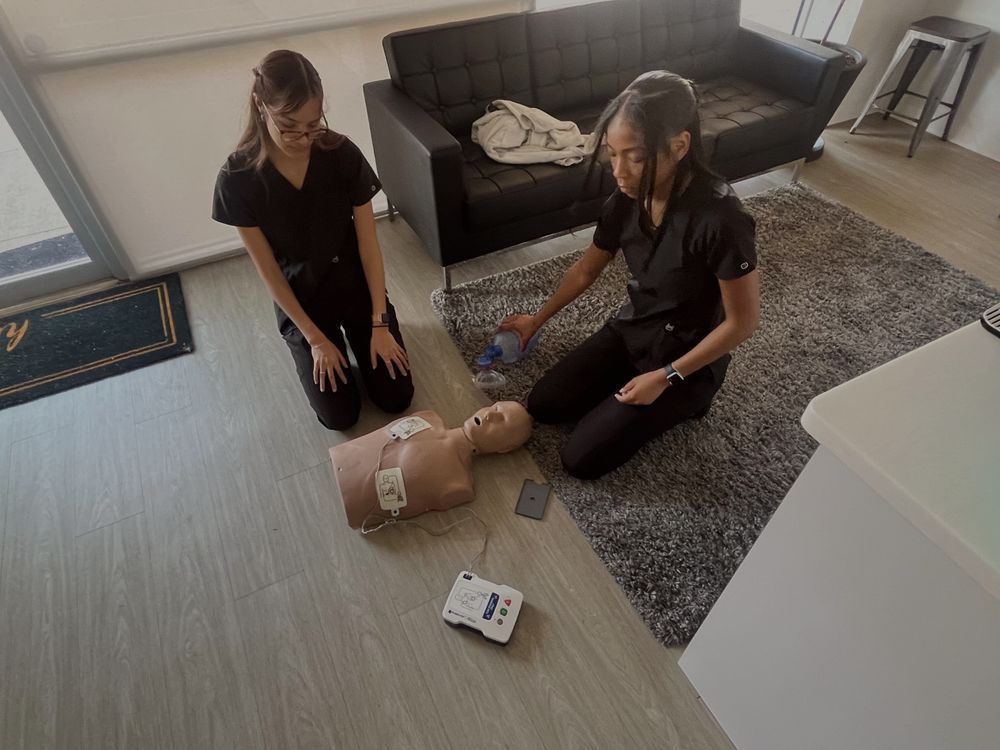
Arch partners with real dental offices for all in-person lab days. Students train in functioning dental practices — with real equipment, real sterilization protocols, real provider communication, and real office workflows — not classroom replicas.
Browse Arch locations near you
Arch operates across multiple locations nationwide. You can find a location near you and learn about the clinical training setup at each one here:
Browse all Arch Dental Assistant locations →
What to look for beyond location
Once you’ve identified programs that are physically accessible, evaluate them on these criteria:
Does the schedule fit your life?
Most people searching for dental assistant schools near them have jobs, families, or other commitments that don’t pause during training. A program that requires five days a week on campus, during business hours, for six months is accessible on paper but unavailable in practice.
Look for programs with:
- Online or evening options for knowledge-based content
- Lab sessions concentrated on weekends
- A total timeline that doesn’t require you to stop working
Arch’s 10-week program is specifically designed for this. Knowledge content is delivered online — live sessions plus self-paced coursework — and all four lab days fall on weekends. Most students remain employed throughout.
What is the total cost?
Not the program fee — the total cost. Include:
- Tuition
- Equipment kits and supplies
- Exam fees
- Materials
- Any registration or technology fees
Then ask whether financial aid is required. Programs built around financial aid often have inflated tuition because aid acceptance is built into the pricing model. Students end up with debt that outlasts their enthusiasm for the field.
Arch’s $2,950 total tuition is the complete cost. Payment plans are available (weekly auto-draft), and because Arch doesn’t accept financial aid by design, the price is kept genuinely low. Graduates finish debt-free.
How long is the program — and does length correlate with quality?
A longer program isn’t a more thorough program. It’s often a reflection of the school’s pacing, accreditation requirements for a credential type, or the structure of financial aid disbursement schedules (which incentivize longer enrollment windows).
A well-designed 10-week program can prepare you as thoroughly as a 9-month program — if the curriculum is dense, the instruction is high quality, and the hands-on training is genuine.
What certification does it prepare you for?
For dental assistants, the relevant credentials include:
- Registered Dental Assistant (RDA) — state-issued, required in some states for expanded-function clinical work
- Certified Dental Assistant (CDA) — national credential through the Dental Assisting National Board (DANB)
- Radiation Health and Safety (RHS) / Infection Control (ICE) — DANB component exams often required for RDA
Arch prepares students for the RDA exam and includes X-ray certification preparation, positioning graduates for expanded-function roles that pay above entry-level DA rates.
Is there real career support after graduation?
Finishing a program is only meaningful if it leads to employment. Ask specifically about:
- Job placement support or connections to local dental offices
- Resume assistance
- Interview preparation
- Average time from graduation to employment for recent graduates
What the job market looks like for dental assistants
If you’re evaluating programs, you want to know the opportunity on the other side of training. Here’s the picture for 2026:
- BLS national median salary: approximately $42,000–$48,000/year
- Entry-level (certified, RDA): approximately $36,000–$42,000/year
- Specialty settings (orthodontics, oral surgery, pediatric): $48,000–$62,000+/year
- Job growth: BLS projects 8% growth through 2032 — faster than average
- Demand: dental practices are consistently hiring, especially for certified RDA-eligible assistants
Dental assisting is not a saturated field. Trained, certified graduates with real hands-on experience are what dental offices want — and they can typically find positions within 4–8 weeks of graduation.
What graduates actually care about looking back
Students evaluating dental assistant schools tend to focus heavily on price and proximity. Graduates — people who’ve been through a program and are now working — consistently say the decision factors that mattered most in retrospect were different:
Whether the training felt real. Graduates who trained in actual dental offices report feeling genuinely prepared on their first day of employment. Graduates who trained in campus labs often describe a gap between training and the real work environment that took weeks to close on the job — on their employer’s time.
Whether certification was thorough. The RDA or CDA credential opens doors. Graduates who completed programs with rigorous, integrated credential prep report moving through hiring processes faster and receiving higher starting offers.
Whether the schedule was realistic. Students who had to quit jobs or significantly reduce hours to attend a campus-heavy program describe financial stress that affected their experience. Students in flexible hybrid programs report completing training while maintaining income.
Whether the cost was worth it. A program that costs $12,000 and takes 9 months is a very different financial decision than a program that costs $2,950 and takes 10 weeks — even if both lead to the same credential. Graduates who completed programs with high tuition and took loans consistently say the debt affected their early career in ways they didn’t anticipate.
How Arch compares to typical local programs
| Arch | Typical community college | Typical career school | |
|---|---|---|---|
| Program length | 10 weeks | 9–12 months | 4–9 months |
| Total cost | $2,950 | $5,000–$15,000 | $8,000–$20,000 |
| Hands-on training | Real dental offices | Campus lab | Campus lab |
| Schedule flexibility | Online-first + weekend labs | Weekday campus | Varies |
| Graduate debt | $0 | Often $5,000–$15,000+ | Often $8,000–$20,000+ |
| RDA prep | Included | Varies | Varies |
Find a location near you
Arch has locations across the country, with in-person lab days held in real partner dental offices in each market.
See all Arch Dental Assistant locations →
- See the full program: Program details
- Review tuition and payment plans: Tuition
- Talk to our team: Contact
- Apply now: How to apply
You're only a few months from the medical assistant career you deserve.