Requirements for Dental Assistant: What You Actually Need (It's Less Than You Think)
One of the most common reasons people delay starting a healthcare career is the assumption that the barrier is higher than it actually is. With dental assisting, the requirements are genuinely minimal — and most people already meet them without realizing it.
Here’s exactly what’s required: for the job, for training programs, and for certification — and why none of it should stop you from starting.
Requirements to work as a dental assistant
At the employment level, dental assistant requirements vary somewhat by state, but the common baseline is:
- High school diploma or GED — required by virtually every employer and training program
- Dental assistant training — either through a formal program or on-the-job training (though employer-based training is becoming less common as certified candidates are increasingly preferred)
- State-specific certification or registration — required in many states for expanded clinical duties (see below)
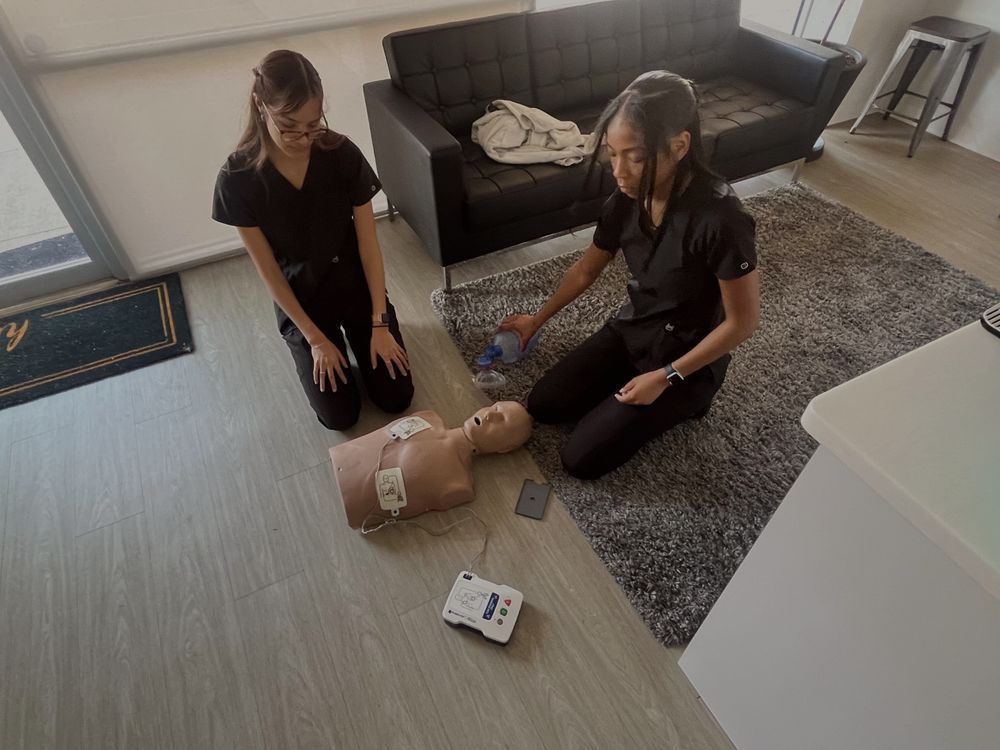
- CPR/BLS certification — required by most employers; usually available as a brief add-on course
- Background check — standard for clinical healthcare positions
- Minimum age — typically 18, though some states allow 17-year-olds to begin training
That’s it. No college degree. No prerequisite science courses. No prior healthcare experience.
Requirements to enroll in a dental assistant training program
At the program level, requirements vary by school. Some community college programs require placement testing or specific GPA minimums. Some career schools have essentially no prerequisites.
Arch’s enrollment requirements:
- High school diploma or GED — the only academic requirement
- No prior dental or healthcare experience — the program is designed for complete beginners
- No prerequisite courses — no biology, chemistry, or anatomy required before starting
- Age 18 or older (varies slightly by location)
If you graduated high school, you qualify to enroll. The curriculum starts from the foundations and builds from there.
State-specific requirements for dental assistant certification
This is where requirements vary meaningfully, and it’s worth understanding before you enroll in any program.
States with RDA licensure (Registered Dental Assistant)
Several states — California being the most prominent — require dental assistants who perform expanded clinical functions to hold a state-issued RDA license. Requirements typically include:
- Completion of an approved dental assistant training program
- Passing written and practical exams (state-administered or DANB-based)
- Radiography certification (sometimes separate from the RDA itself)
- Ongoing continuing education for license renewal
Arch prepares students for RDA exam requirements and includes X-ray certification preparation as part of the standard curriculum.
States with DANB certification requirements
The Dental Assisting National Board (DANB) administers national certification exams. The CDA (Certified Dental Assistant) designation and component exams (Radiation Health and Safety, Infection Control, General Chairside) are recognized in multiple states.
Some states require passing one or more DANB component exams as a condition of performing certain clinical procedures. Others accept the CDA as an optional credential that expands clinical scope and earning power.
States with no mandatory certification
A number of states allow dental assistants to work without formal certification, especially for basic chairside duties. Employers in these states still typically prefer certified candidates — and pay certified assistants more.
Regardless of your state’s specific requirements, graduating from a formal training program and earning applicable credentials positions you to work across a wider range of practices, perform expanded duties, and earn at a higher level than assistants without formal training.
What the Arch program actually requires of you
Being honest about student expectations is part of what makes a program worth your time. Here’s what Arch realistically requires during the 10-week program:
Time commitment:
- Live online sessions on scheduled days (evenings and weekends)
- Self-paced coursework between sessions — reading, assignments, and module assessments
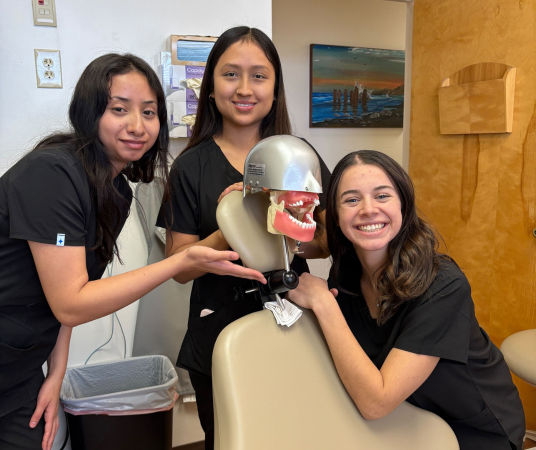
- 4 full-day (9-hour) lab sessions across 2 weekends: one in week 4, one in week 8
- Total weekly time: approximately 10–15 hours depending on your pace with self-paced content
Practical access:
- A device capable of video conferencing for live sessions
- Reliable internet access for online coursework
- Transportation to the two weekend lab locations
Mindset:
- Willingness to learn clinical skills from scratch — no prior experience required or assumed
- Engagement during live sessions and lab days
- Consistent follow-through on self-paced work between sessions
That’s the real picture. Most people who ask about requirements are wondering whether they’re eligible. The answer is almost certainly yes.
What certification you’ll be prepared for after Arch
After completing Arch’s 10-week program:
- RDA exam preparation — curriculum is designed around the skills and knowledge the RDA exam tests
- X-ray certification — radiation safety and radiograph exposure technique are covered explicitly
- Expanded-function eligibility — in states with RDA licensure, passing the exam qualifies you for coronal polishing, sealant placement, orthodontic procedures, and other expanded duties
These credentials directly affect your earning power:
- Non-certified DA (entry-level): approximately $30,000–$36,000/year
- Certified / RDA: approximately $36,000–$42,000/year entry-level, $48,000–$62,000+ with experience
- Specialty practices (ortho, oral surgery): often $50,000–$65,000+ for experienced, certified assistants
What a typical day requires of a dental assistant — and why training matters
Understanding the requirements to become a dental assistant also means understanding what the job actually requires you to do once you’re in it. These are the core competencies employers expect:
Chairside assisting: Positioning, instrument transfer, suction and retraction, isolation, and patient preparation across restorative procedures, extractions, and specialty work. This requires physical coordination and procedural knowledge that develops through hands-on practice.
Dental radiography: Placing sensors or film, positioning the tube head, exposing digital X-rays, and evaluating image quality. X-ray certification is required in virtually every state for dental assistants who take radiographs — Arch covers this explicitly.
Infection control: Sterilizing instruments, maintaining OSHA compliance, disposing of sharps and biohazardous material, and disinfecting treatment rooms between patients. This is procedural knowledge with a safety dimension — errors have real consequences.
Patient communication: Managing anxious patients, explaining procedures in plain language, providing post-op instructions, and handling questions calmly and professionally. This is a soft skill that matters as much as technical competency in most dental offices.
Tray setup and instrument knowledge: Identifying instruments and assembling procedure-specific trays before the provider enters the room. Speed and accuracy here directly affect how efficiently a practice runs.
Administrative tasks: In smaller practices especially, dental assistants handle scheduling, insurance verification, treatment plan documentation, and patient communication. The administrative dimension of the role is broader than most people expect when they start.
None of these require a college degree, prior healthcare experience, or years of preparation. They do require genuine training — a curriculum that covers the knowledge and a hands-on component that builds the physical skills. That’s what Arch provides in 10 weeks.
The short version
If you have a high school diploma (or GED) and want to become a dental assistant, you meet the requirements for Arch’s program. No prerequisites, no prior experience, no college degree required.
Ten weeks. $2,950. Graduate debt-free. That’s the path.
- See the full program: Program details
- Review tuition and payment plans: Tuition
- Talk to our team: Contact
- Apply now: How to apply
You're only a few months from the medical assistant career you deserve.