What to Actually Look for in a Dental Assistant School (Most Lists Get This Wrong)

There are a lot of dental assistant schools out there — community colleges, career schools, online programs, hospital-based programs, and everything in between. Most people researching their options end up comparing tuition prices and program lengths, but those two numbers don’t tell you very much about whether a program will actually prepare you for the job.
Here’s what actually matters when you’re evaluating a dental assistant school — and how to use these criteria to separate programs worth your time from ones that aren’t.
The criteria that actually predict career readiness
1. Where does hands-on training happen?
This is the most important question you can ask a dental assistant school, and it’s the one most marketing materials are deliberately vague about.
Some programs describe their training facilities in clinical language — “simulation lab,” “clinical training environment,” “dental unit stations” — without disclosing that it’s a campus room with dental chairs, not an actual dental office.
This distinction matters enormously. A dental office is a functional environment with real patient workflows, instrument sterilization protocols, provider communication patterns, and infection control procedures that don’t exist in a classroom. Learning in a real office means you absorb those dynamics before your first day of employment. Learning in a classroom simulation means your employer absorbs that learning curve on their time.
Ask specifically: Do students train in real, working dental offices? If the answer involves “our training facility” or “our campus lab,” follow up.
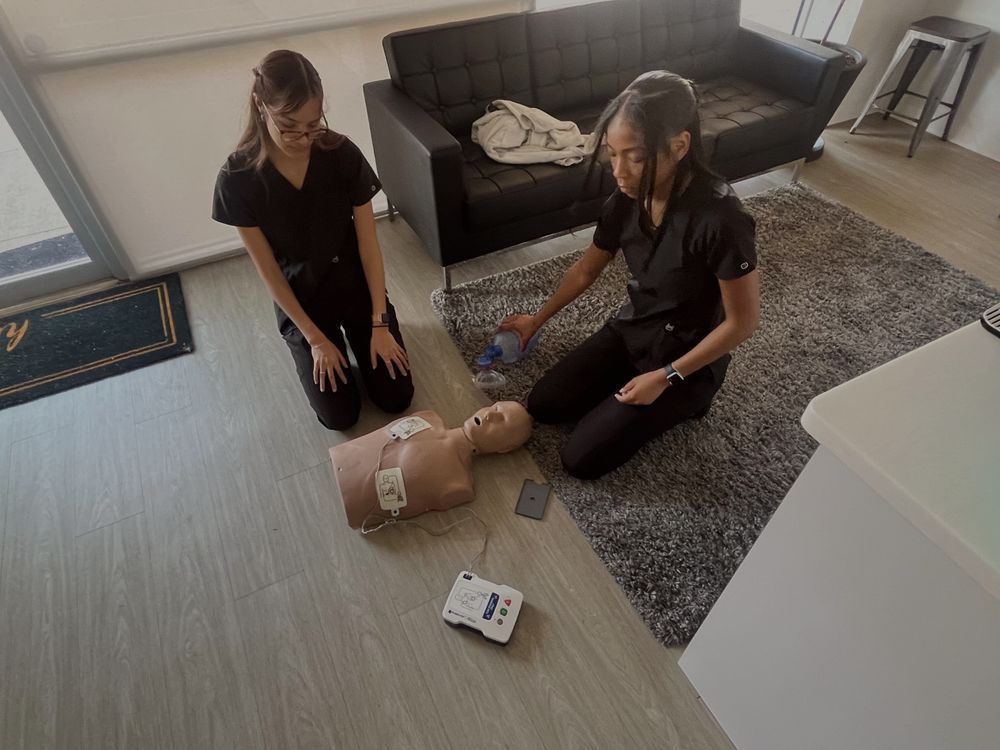
Arch’s 4 lab days take place in real partner dental offices. Students practice chairside skills, radiography, sterilization protocols, and patient preparation in the same kind of environment they’ll work in after graduation.
2. What is the total cost — and what does it actually include?
Headline tuition numbers are rarely the full picture. Some schools advertise low program fees and add equipment kits, registration fees, exam fees, or supply costs afterward. The number you need is the all-in cost: tuition plus everything required to complete the program and sit for certification.
Arch’s $2,950 total includes the full program, materials, and RDA exam preparation. No surprises after enrollment.
Also worth considering: does the school accept financial aid, and does accepting it affect your cost? Programs that keep costs low by not accepting federal aid often do so intentionally — it keeps tuition down and ensures graduates don’t start their careers buried in debt.
Arch is specifically designed to be completable without financial aid. The $2,950 price point reflects that commitment. Weekly payment plan options mean you don’t need a lump sum, and you graduate debt-free.
3. What does the schedule actually look like?
For most people considering dental assisting, a program that requires full-time weekday attendance on a campus is a non-starter. You have a job, a family, or other obligations that don’t pause during training.
Evaluate the real schedule:
- Does it require daily commutes to a campus?
- Are classes weekdays only, or are there evening/weekend options?
- How many hours per week does it actually require?
- Can you work during the program?
Arch’s structure: live online sessions for knowledge-based content, self-paced coursework on your schedule, and 4 full-day lab sessions on weekends (weeks 4 and 8). Your weekdays stay available. Most students maintain employment throughout.
4. What certification does it prepare you for?
The relevant credential for dental assistants varies by state, but the most common pathway involves:
- Registered Dental Assistant (RDA) — required in many states for expanded clinical duties
- Certified Dental Assistant (CDA) — national credential through the DANB
- Dental Assisting National Board (DANB) exams — specific component exams required in some states
A dental assistant school should explicitly prepare you for the credentialing pathway relevant to your state. Ask what specific exam the curriculum targets and whether exam prep is included in the program cost.
Arch prepares students for the RDA exam and includes X-ray certification preparation as part of the standard curriculum.
5. What is the timeline from enrollment to employed?
Fast programs aren’t inherently better — but unnecessarily long ones waste your time and income. If two programs prepare you equivalently, the one that does it in 10 weeks instead of 9 months is the better option.
The realistic timeline after graduation includes:
- Exam scheduling and preparation (if not completed during the program)
- Job search and interviews
- Employer onboarding
A well-designed 10-week program should produce graduates who are interview-ready immediately after finishing and employed within 4–8 weeks of graduation.
Arch’s 10-week timeline means you can be working as a certified dental assistant in approximately 3–4 months from enrollment.
Questions to ask any dental assistant school
Before enrolling anywhere, ask these directly:
- Where do students complete their in-person clinical training? (Real dental office or campus lab?)
- What is the all-in cost, including exam fees and materials?
- Is the schedule compatible with maintaining employment during the program?
- What certification exam does the program prepare students for?
- What is the average time from graduation to employment for recent graduates?
- What happens if I need to reschedule a lab day or miss a session?
- Is there career support or job placement assistance after graduation?
The answers to these questions tell you far more about a program than the brochure does.
What “online-first” actually means at Arch
Some prospective students see “online-first” and interpret it as “mostly independent study with no accountability.” That’s not how Arch works.
Live online sessions — scheduled, instructor-led virtual classes — handle the knowledge content: dental anatomy, radiography theory, infection control, dental materials, pharmacology basics, and clinical procedures. You’re in a real class, with a real instructor, alongside other students who are going through the program at the same time.
Self-paced coursework fills in between sessions — readings, assignments, and assessments at your own pace within each week’s structure.
4 in-person lab days — full 9-hour sessions, across 2 weekends in weeks 4 and 8 — build the physical skills the job requires and the RDA exam tests.
This is not an asynchronous self-study course. It’s a structured program with real instructor support and genuine clinical training.
What the job market looks like after graduation
Choosing the right dental assistant school isn’t only about the training experience — it’s about where the training leads. Here’s the current picture for dental assistants in 2026:
Salary:
- Entry-level (certified): approximately $36,000–$42,000/year (BLS and Indeed, 2026)
- National median: approximately $42,000–$48,000/year
- Specialty practices: $48,000–$62,000+/year for experienced, credentialed assistants
Demand:
- BLS projects 8% employment growth through 2032 — faster than average
- Dental offices across all specialties hire continuously, not seasonally
- Certified candidates with real hands-on training are consistently prioritized over self-taught or uncertified applicants
Career paths from dental assisting:
- Specialty practice (orthodontics, oral surgery, pediatric dentistry) — higher pay, more procedures
- Clinical lead or head assistant in larger group practices
- Dental office management — leveraging clinical and administrative skills
- Dental sales or equipment representation — rare but high-earning path for experienced DAs
- Further education toward dental hygiene or other dental credentials — for those who want to advance within the field
A good dental assistant school doesn’t just prepare you for your first job — it positions you for the career growth that follows.
Red flags to watch out for
Before signing anything, be alert to these warning signs:
Enrollment pressure without full information. Any school that pressures you to enroll before answering your questions about clinical training, total cost, or certification outcomes is not putting your interests first.
Vague answers about hands-on training. “We have a state-of-the-art training facility” is not an answer to “Do students train in real dental offices?” Push for specifics.
Unusually high total cost for a short program. Dental assistant training should not cost $15,000–$25,000. Programs in that range are often built around financial aid disbursement schedules, not student value.
Certification described as optional. RDA certification (in applicable states) is not optional if you want expanded duties and competitive pay. Programs that treat it as an add-on are not aligned with your career outcomes.
How Arch compares on the criteria above
| Criteria | Arch |
|---|---|
| Hands-on training location | Real working dental offices |
| Total cost (all-in) | $2,950 |
| Debt at graduation | $0 |
| Schedule flexibility | Online-first + weekend labs |
| Certification prep | RDA exam + X-ray |
| Timeline to employment | ~3–4 months from enrollment |
- See the full program: Program details
- Review tuition and payment plans: Tuition
- Talk to our team: Contact
- Apply now: How to apply
You're only a few months from the medical assistant career you deserve.