Dental Assistant Classes: What You'll Study, How the Hybrid Format Works, and What You'll Be Able to Do
What are dental assistant classes actually like? If you’re considering dental assisting, you’ve probably seen curriculum descriptions full of bullet points — but not much about what the day-to-day learning experience looks like, or how the material actually translates to a clinical skill.
Here’s a clear breakdown of what dental assistant classes cover, how the hybrid format at Arch Dental Assistant School delivers them, and what you’ll be able to do by the time you complete the 10-week program.
What dental assistant classes cover: the two tracks
Dental assisting requires competency in two areas: clinical skills (what you do chairside, in the operatory, and in the radiography area) and administrative skills (what you do at the front desk, in the records system, and in patient communication). Strong programs teach both.
Track 1: Clinical skills classes
Dental anatomy and oral health fundamentals
Before you can assist during procedures, you need to know what you’re looking at. Dental anatomy classes cover:
- Tooth numbering systems (Universal, Palmer, and FDI)
- Oral structures: gingiva, bone, pulp, periodontal ligament
- Common dental conditions: caries, periodontal disease, occlusal wear
- Dental instruments: names, functions, and identification by sight
- The anatomy and function of the structures you’ll encounter in every procedure
Infection control
Infection control is one of the most critical competencies in dental assisting. Classes cover:
- OSHA bloodborne pathogen standards and what they require of dental offices
- CDC guidelines for dental infection prevention
- Sterilization methods: autoclaving, chemical vapor, dry heat
- Instrument classification: critical, semi-critical, non-critical — and what that means for sterilization
- Operatory disinfection: surface barriers, spray-wipe-spray technique, turnover protocol
- PPE: proper selection, donning, doffing, and disposal
Dental materials
Working with materials is a large part of the chairside role. Dental assistant classes in materials cover:
- Impression materials: alginate (working time, consistency, tray selection) and polyvinyl siloxane (PVS)
- Cements and bases: zinc oxide eugenol (ZOE), glass ionomer, resin-modified glass ionomer
- Composite restorative materials: placement, curing, finishing
- Temporary crown and bridge materials: fabrication, trimming, cementation
- Dental waxes and articulating materials
Dental radiography
X-ray training is both theoretical and hands-on. Classes cover:
- Types of dental X-rays: bitewing, periapical, panoramic, occlusal
- Patient positioning and film/sensor placement for each type
- Radiation safety: lead aprons, thyroid collars, ALARA principle
- Digital radiography: sensor handling, software operation, image quality evaluation
- Radiation biology basics: what ionizing radiation does and how exposure is minimized
Chairside assisting
This is the highest-stakes skill set — and it’s almost entirely learned through practice. Classes introduce the concepts, but mastery comes from doing:
- Instrument passing: fulcrum technique, transfer zone, handling sharp instruments safely
- Suction technique: HVE positioning, saliva ejector use, maintaining a clear field
- Tissue retraction: mirror, retractor, and cheek retractor use
- Material passing: coordinating with the dentist during restorative procedures
- Four-handed dentistry: the choreography of seamless, efficient procedural assist
Track 2: Administrative skills classes
Dental charting and electronic records
- Tooth charting: existing restorations, missing teeth, pathology notation
- Treatment planning notation and progress documentation
- Electronic health records: navigating common dental EHR platforms
- HIPAA compliance: what it requires in charting, communication, and records access
Scheduling and patient flow
- Appointment scheduling: booking, confirming, managing cancellations and same-day openings
- Appointment sequencing for common procedures
- Managing multi-provider practices
Insurance and billing
- Dental insurance basics: coverage tiers, frequency limitations, coordination of benefits
- ADA procedure codes (CDT codes): the numbering system used in all dental billing
- Pre-authorization: when it’s required and how to obtain it
- Basic claims submission and tracking
Patient communication
- Phone etiquette: scheduling, handling questions, triaging urgent calls
- Chairside communication: explaining procedures in plain language, managing anxious patients
- Post-procedure instructions: what to say and how to document it
How the hybrid format delivers dental assistant classes
The Arch Dental Assistant School curriculum uses online coursework for what can be learned effectively through instruction and study, and in-person labs for what requires physical practice.
Online classes (throughout 10 weeks)
Live and instructor-led — not just pre-recorded videos. You attend scheduled sessions, ask questions in real time, and work through content with direct instructor access. The online component covers theory, administrative training, and procedural knowledge that prepares you to succeed in the lab days.
4 in-person lab days (9 hours each)
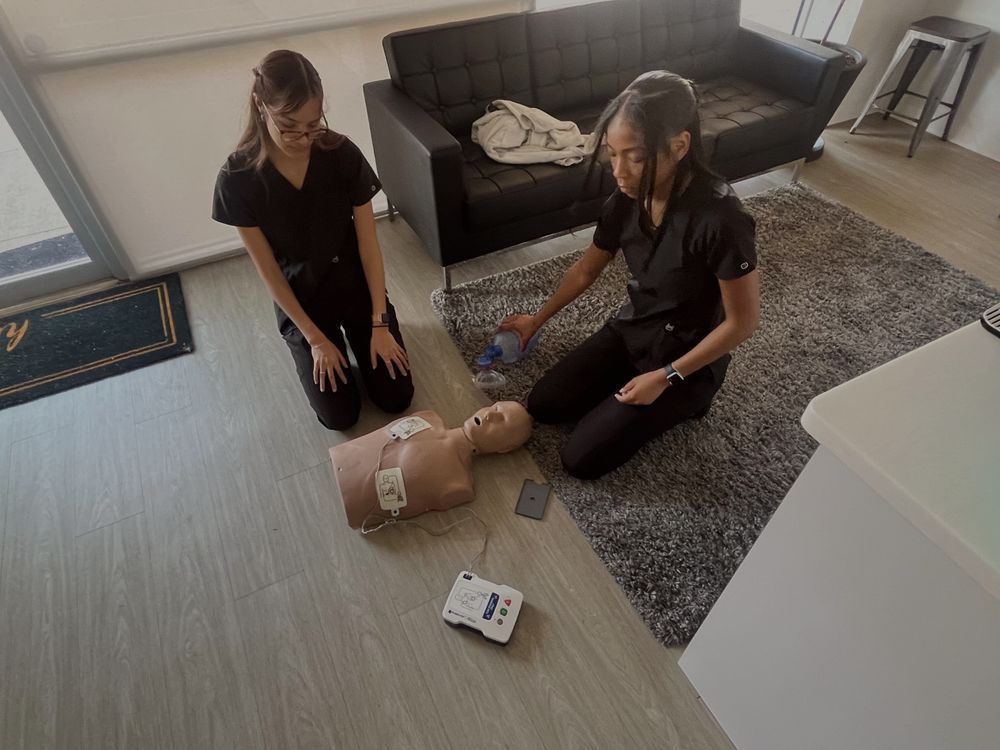
Two weekends — one in week 4, one in week 8 — each consisting of two consecutive full lab days. These sessions translate online learning into physical skill:
- Infection control hands-on practice
- Dental materials mixing, handling, and application
- Instrument identification and passing technique
- Chairside assisting during simulated and real-environment procedures
- Dental radiography: positioning and exposure technique on real equipment
Labs are held in real dental offices — the same environment you’ll work in after graduation.
How long are dental assistant classes?
The full Arch Dental Assistant School program runs 10 weeks — the fastest credentialed dental assistant training path available. It ends with RDA certification exam preparation built in, so you graduate ready to test, not starting your exam prep from scratch.
What you can do after completing dental assistant classes
By the end of the 10-week program, you’ll be able to:
- Assist a dentist chairside during restorative, extraction, and examination procedures
- Take diagnostic-quality dental X-rays
- Maintain clinical infection control to OSHA standards
- Mix and handle all common dental materials
- Chart, schedule, and handle basic insurance and billing functions
- Communicate professionally with patients throughout the appointment
The cost of dental assistant classes
Total program cost at Arch Dental Assistant School: $2,490 all-inclusive. This covers all 10 weeks of online instruction and all 4 in-person lab days (36 hours of hands-on clinical training). No financial aid accepted — graduates complete the program debt-free. Payment plans available.
Job outlook
The BLS projects 7% growth in dental assistant employment through 2032. National median salary: $45,941 per year. Entry-level: $32,000–$38,000 depending on market.
Get started with Arch Dental Assistant School
- Full curriculum overview: Program details
- Tuition and payment options: Tuition
- Talk to our team: Contact us
- Apply: How to apply
You're only a few months from the medical assistant career you deserve.