Dental Assistant Online Programs: How to Train From Home and Get Certified
The number of dental assistant online programs has grown significantly in the past few years — and so has the confusion about what they actually deliver. Some programs offer a genuine path to certification and employment. Others sell coursework that won’t prepare you for the physical demands of a clinical job. And a few combine the best of both worlds: online flexibility for knowledge-based content and in-person labs for the hands-on skills that dental offices require.
Here’s how to separate the programs worth your time from the ones that aren’t.
What Dental Assistant Online Programs Can Teach You
Online delivery works well for content that’s knowledge-based and doesn’t require physical practice:
- Dental terminology and anatomy — the language and science of dentistry
- Infection control theory — OSHA regulations, sterilization science, PPE standards
- Dental materials knowledge — properties, uses, and handling of cements, composites, and impression materials
- Radiography safety and physics — exposure principles, radiation protection, image evaluation concepts
- Patient communication — intake procedures, managing anxiety, aftercare instructions
- Administrative procedures — scheduling, dental charting, insurance verification, EHR systems
- Professional development — resume writing, interview preparation, workplace conduct
These topics represent roughly half of what a dental assistant needs to know — and online instruction handles them efficiently.
What Requires Hands-On Practice
The other half of dental assisting is physical. These skills require muscle memory, tactile feedback, and practice under supervision:
- Chairside assisting — instrument passing, suction management, retraction technique, four-handed dentistry
- Dental radiography — patient positioning, sensor/film placement, exposure technique, digital system operation
- Impression taking — loading trays, seating properly, timing, and removal without distortion
- Dental materials handling — mixing cements, applying composites, fabricating temporary restorations
- Sterilization procedures — proper instrument cleaning, autoclaving, chemical disinfection, cassette management
- Patient positioning and chairside setup — operatory preparation, tray assembly, barrier placement
No video lecture can teach your hands how to pass a mirror and explorer smoothly during an exam or position an X-ray sensor in a patient’s mouth. These skills require physical repetition.
The Hybrid Approach: How Arch Dental Assistant School Works
Arch’s 10-week dental assistant program combines online flexibility with in-person clinical rigor:
Online sessions (the majority of your schedule)
- Live, instructor-led classes — real-time interaction with your instructor and classmates
- Structured weekly coursework covering dental science, terminology, anatomy, materials, and administrative procedures
- RDA certification exam content woven throughout every module
- Flexible scheduling designed for working adults and parents
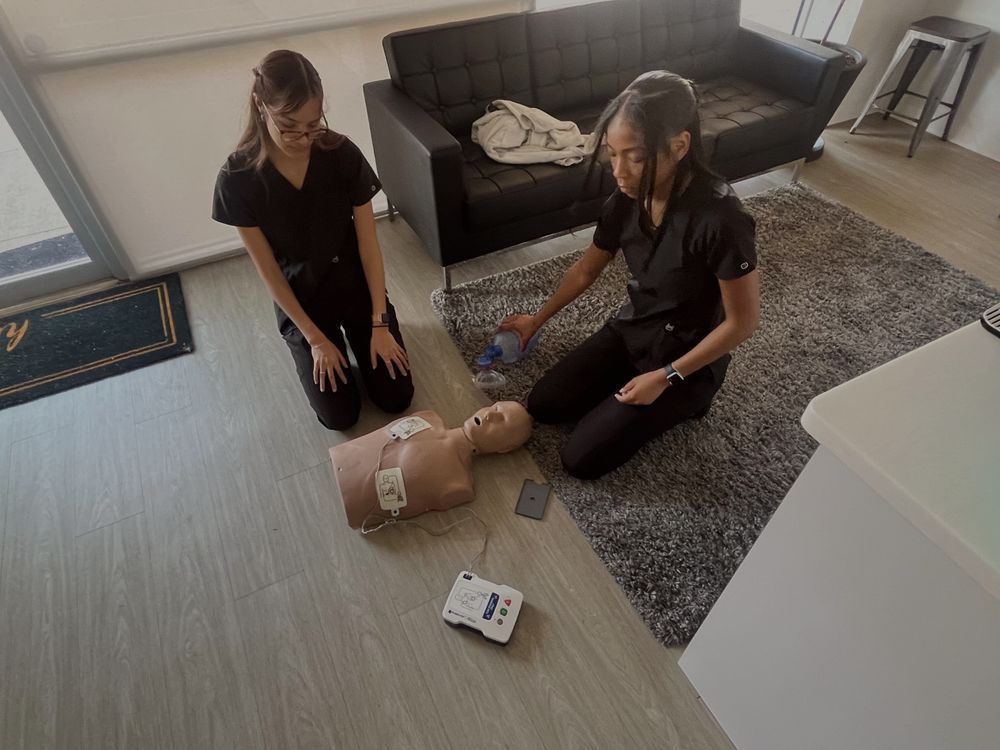
In-person labs (4 intensive sessions)
- 9-hour lab days spread over 2 weekends (weeks 4 and 8)
- Hands-on practice with dental instruments, radiography equipment, impression materials, and sterilization systems
- Direct instructor feedback and technique correction
- Where the online knowledge becomes physical skill
This model means you’re not sacrificing clinical competency for schedule convenience. You get both.
How to Evaluate Dental Assistant Online Programs
Before enrolling in any online dental assistant program, verify these five things:
1. Does it include in-person clinical training?
If not, you’ll graduate without the hands-on skills employers expect. The best online programs are hybrid — online for coursework, in-person for clinical practice.
2. What certification does it prepare you for?
Look for programs that prepare you for the RDA (Registered Dental Assistant) credential or equivalent. Nationally recognized certifications carry weight with employers. Internal “certificates of completion” often don’t.
3. Is it instructor-led or self-paced?
Self-paced programs offer flexibility but minimal accountability. Live, instructor-led sessions keep you engaged, allow immediate questions, and maintain the structure that working adults need to finish.
4. What’s the total cost — and are loans involved?
Arch’s tuition is $2,490 with payment plans. No student loans. You graduate debt-free. Be wary of programs that push federal financial aid for short-term training.
5. Does it include career support?
Resume help, interview prep, and connections to local employers should be part of the package — not an afterthought.
The Dental Assistant Job Market
The Bureau of Labor Statistics reports:
- Median salary: $46,540/year for dental assistants nationally
- Job growth: 7% projected through 2033
- Entry-level range: $33,000–$40,000
- Experienced range: $48,000–$58,000+
Certification, specialty experience, and geographic market all affect where you land within those ranges. But the fundamentals are clear: demand is steady, growth is positive, and trained dental assistants are in a strong employment position.
Who Online Dental Assistant Programs Work For
- Working adults who can’t attend weekday classes
- Parents and caregivers who need schedule flexibility
- Career changers entering dental assisting for the first time
- People without a local in-person program nearby
- Motivated learners who thrive with structured online coursework and accountability
Ready to Start?
- See the full program: Program details
- Review tuition and payment plans: Tuition
- Talk to our team: Contact
- Apply: How to apply
You're only a few months from the medical assistant career you deserve.