Dental Assistant Salary: What the Real Numbers Look Like and How to Move Up the Range
Before committing to any training program, it’s reasonable to ask: what does a dental assistant salary actually look like? Not what a program’s marketing says it looks like — what the real numbers are, what drives them up or down, and how your training choices affect where you land in that range.
Here’s a straight answer, backed by Bureau of Labor Statistics data.
National dental assistant salary: the real numbers
According to the BLS, the national median dental assistant salary is:
- Annual median wage: $45,941
- Hourly median wage: $22.09
The bottom 10% of earners made under $31,790. The top 10% earned more than $61,250. That’s a meaningful spread — and understanding what drives it determines which end of the range you’re aiming for.
What moves dental assistant salary up or down
1. Experience
This is the biggest single factor in the early career. Entry-level dental assistants — first year on the job — typically start between $32,000 and $38,000 per year. After two to three years, most assistants settle in the $42,000–$50,000 range. Experienced assistants with specialty skills push past that.
2. Geographic market
A dental assistant in San Francisco earns more than one in a small rural town — not because the job is different, but because cost of living and market competition drive wages higher in metro areas. State-level BLS data for dental assistants shows medians ranging from roughly $35,000 to over $55,000 depending on location.
3. Practice type
Dental assistants in specialty offices — orthodontics, oral surgery, periodontics, endodontics — typically earn more than those in general dentistry. Specialty work involves more complex procedures, more demanding technique, and higher billing rates — all of which translate into better assistant pay.
4. Credentials
Dental assistants who hold a Registered Dental Assistant (RDA) certification, Radiation Health and Safety (RHS) certification, or Infection Control (ICE) certification earn more, on average, than their non-credentialed peers in the same market. Certification signals verified clinical competency, and employers pay for it.
In some states, credentialed assistants can perform expanded functions — coronal polishing, fluoride application, placing and removing retraction cord — which increases their value further.
5. Efficiency and patient volume
In a high-volume dental office, a skilled assistant makes the difference between seeing 20 patients a day and 28. Assistants who consistently run efficient, smooth procedures become genuinely valuable to the practice — and that shows up in reviews, raises, and offers from competing offices.
Entry-level salary: year one expectations
Most dental assistants start in the $32,000–$38,000 range in their first year. Here’s how that typically breaks down:
- Hourly rate: $16–$19
- Full-time (40 hrs/week): $33,000–$39,500 annually
- Benefits: Many dental offices offer health insurance, paid time off, dental benefits for employees and family members
Year one is the learning curve. Year two and three are where skills solidify and salary movement becomes consistent.
How to increase your dental assistant salary
Get certified
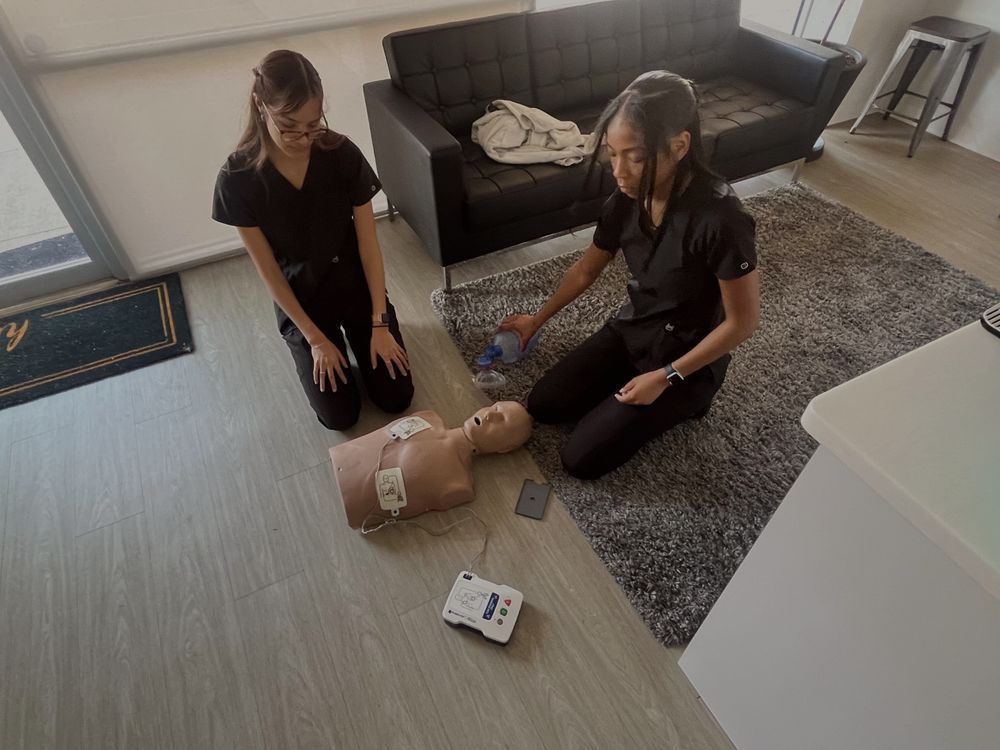
The RDA certification (or state equivalent) is the single most effective lever for increasing pay early in your career. Programs like Arch Dental Assistant School include RDA exam preparation as part of the curriculum — you graduate prepared to sit for the exam, not starting from scratch.
Work toward expanded functions
Expanded function dental assistants (EFDA) who can perform additional clinical procedures earn significantly more. Once you’re working and credentialed, look for expanded functions training opportunities.
Choose specialty offices strategically
Orthodontic, oral surgery, and periodontic offices typically pay more than general dentistry. They also offer consistent, predictable workflows once you’ve mastered the specialty’s techniques.
Be reliable and technically excellent
This sounds basic, but it’s genuinely the fastest path to raises in dental assisting. Dentists who find an assistant who shows up, runs clean procedures, and communicates well with patients will pay to keep them. Assistants who develop a reputation for excellence in a local dental community tend to get offers unsolicited.
How training program length affects lifetime earnings
Here’s a calculation worth doing. The Arch Dental Assistant School program runs 10 weeks. A community college dental assisting program typically runs 12–24 months covering the same core clinical skills.
If you complete a 10-week program instead of an 18-month program:
- You enter the workforce 14–16 months earlier
- At an entry-level salary of $36,000/year, that’s roughly $42,000–$48,000 in additional earnings before a longer-program graduate has finished their first year
- You start building clinical experience, professional relationships, and your credentials faster
The economic case for a focused, shorter program isn’t just about saving time — it’s about starting the career income clock earlier.
What the job market looks like long-term
The BLS projects 7% growth in dental assistant employment through 2032 — faster than average for all occupations. That demand is driven by:
- An aging U.S. population needing ongoing dental care
- Growing awareness of the link between oral health and systemic health
- Expansion of dental practices and multi-location dental groups
- Dentists delegating more clinical tasks to trained assistants
Dental assisting is not a field in decline. The combination of consistent demand, accessible training, and clear salary growth makes it one of the more reliable career bets in allied health.
The Arch Dental Assistant School cost-to-salary comparison
| Arch Dental Assistant School | Community College | |
|---|---|---|
| Program length | 10 weeks | 12–24 months |
| Total cost | $2,490 | Varies: $5,000–$15,000+ |
| Time to employment | ~3 months | 13–25 months |
| Debt at graduation | $0 | Varies |
| Entry-level salary | $32,000–$38,000 | $32,000–$38,000 |
The entry-level salary is the same. The difference is how quickly you start earning it and how much you spent getting there.
Get started with Arch Dental Assistant School
- See what the 10-week program covers: Program details
- Review tuition and payment plans: Tuition
- Talk to our team: Contact us
- Apply: How to apply
You're only a few months from the medical assistant career you deserve.