Dental Assistant Training Online: What Works, What Doesn't, and How to Choose
The promise of dental assistant training online is compelling: learn from home, train on your schedule, and enter a growing healthcare career without commuting to a classroom. But dental assisting is a hands-on profession, and not all online training options deliver the clinical skills that employers actually need.
Here’s an honest assessment of what online dental assistant training can accomplish, where it falls short, and how to find a program that gives you both flexibility and clinical competency.
What Online Training Gets Right
For the knowledge-based portion of dental assisting, online delivery is genuinely effective:
Dental science and terminology — the vocabulary, anatomy, and foundational science of dentistry. These are inherently knowledge-based subjects that work well in a lecture and study format.
Infection control and safety — OSHA regulations, sterilization theory, PPE protocols, and workplace safety. Understanding the “why” behind procedures is essential before you practice the “how.”
Dental materials theory — learning the properties, uses, and handling requirements of cements, composites, impression materials, and temporaries before you physically work with them.
Administrative skills — scheduling, insurance verification, dental charting, and EHR navigation are all computer-based tasks that translate well to online instruction.
Certification exam preparation — content review, practice questions, and exam strategies can all be delivered effectively through a virtual platform.
Professional development — resume writing, interview preparation, and career readiness training work well in an online format.
Where Online-Only Training Falls Short
The challenge is the clinical half of the job. Dental assistants spend their days:
- Passing instruments to dentists during live procedures
- Positioning X-ray sensors inside patients’ mouths
- Loading impression trays and seating them correctly
- Mixing dental materials to precise consistencies
- Operating suction and managing retraction during procedures
- Sterilizing instruments and turning over operatories between patients
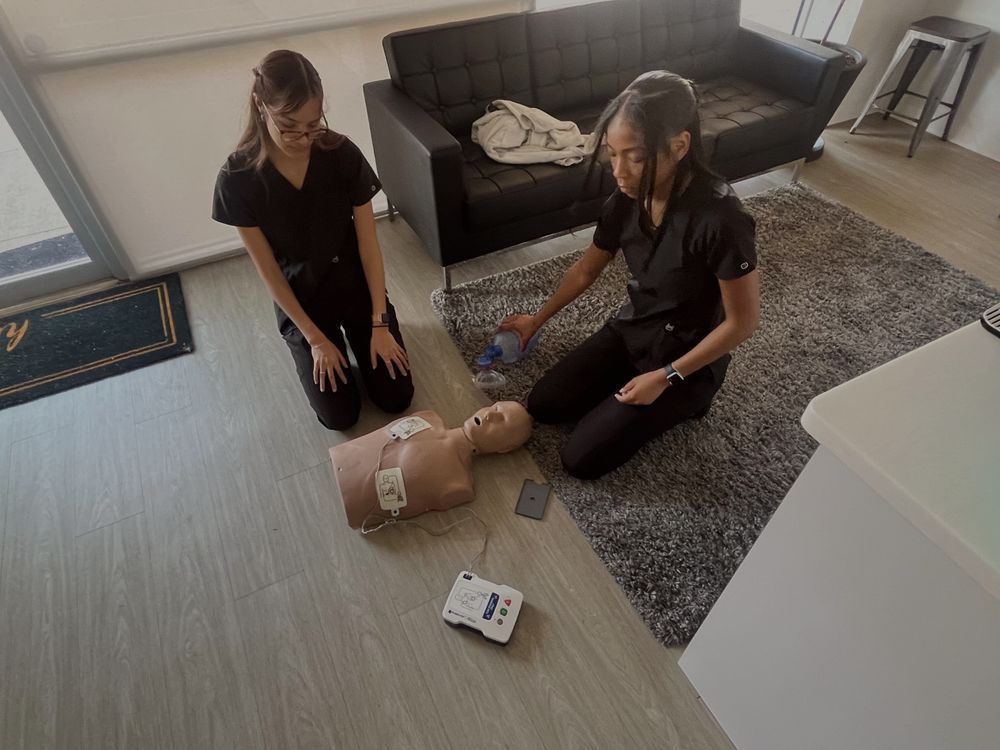
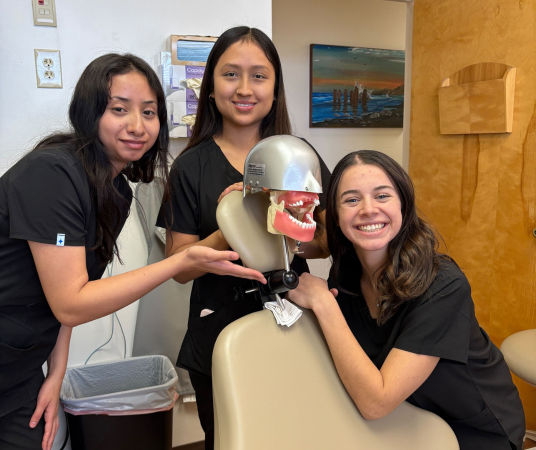
These are motor skills. They require physical repetition, tactile feedback, and real-time instructor correction. No video tutorial can replace the experience of actually holding a dental mirror, positioning an X-ray sensor, or mixing an alginate impression.
The result: graduates of online-only programs often struggle in interviews and on the job because they lack the physical confidence and muscle memory that clinical practice builds.
The Hybrid Solution
The most effective dental assistant training online is actually dental assistant training that’s mostly online — with critical in-person lab sessions for clinical skills practice.
Arch Dental Assistant School uses this exact model in its 10-week program:
- Online sessions: Live, instructor-led classes covering dental science, terminology, anatomy, materials, infection control, administrative procedures, and RDA exam preparation
- In-person labs: 4 intensive lab days (9 hours each) across 2 weekends in weeks 4 and 8 — hands-on practice with instruments, radiography equipment, dental materials, and sterilization systems
- Tuition: $2,490 with payment plans. No student loans.
This structure delivers the scheduling flexibility of online learning without the clinical skills gap that online-only programs create.
How Employers View Online Dental Training
Here’s what matters from the hiring side:
Employers value credentials, not delivery methods. An RDA certification earned through a hybrid program carries the same weight as one earned through a purely in-person program. The exam is the equalizer.
But employers also value clinical confidence. In interviews, candidates who’ve trained hands-on describe procedures with precision and specificity. They reference physical skills they’ve practiced — not just concepts they’ve studied. That confidence is visible, and it affects hiring decisions.
The ideal resume shows both: a recognized credential AND in-person clinical experience. Hybrid programs deliver that combination.
Questions to Ask Before Enrolling in Online Dental Training
-
Does the program include any in-person clinical training? If not, understand that you’ll need to develop hands-on skills independently — and that employers may notice the gap.
-
What certification does it prepare you for? Look for RDA or equivalent credentials recognized by employers. Internal “certificates” often carry no weight in the job market.
-
Are classes live or self-paced? Live, instructor-led sessions provide structure and accountability that self-paced courses often lack.
-
Is career support included? Resume help, interview preparation, and employer connections should be part of the program.
-
What’s the total cost? Know the full tuition before enrolling. Avoid programs that push student loans for short-term training.
The Career Behind the Training
The Bureau of Labor Statistics reports:
- Median salary: $46,540/year for dental assistants nationally
- Job growth: 7% projected through 2033 — faster than average
- Entry-level range: $33,000–$40,000
- Certified/experienced range: $48,000–$58,000+
Demand for dental assistants is steady and growing. The question isn’t whether jobs are available — it’s whether your training prepares you to fill them competently.
Ready to Train?
- See the full program: Program details
- Review tuition and payment plans: Tuition
- Talk to our team: Contact
- Apply: How to apply
You're only a few months from the medical assistant career you deserve.