Dental School vs. Dental Assistant School: Two Very Different Paths
If you’ve been searching for a “dental school,” there’s a good chance you mean one of two very different things: a four-year professional program that trains dentists, or a short-term training program that prepares dental assistants. The difference matters a lot — for your timeline, your cost, and what you’ll actually be doing every day on the job.
This guide clears up the confusion and explains exactly what a dental assistant school is, what it isn’t, and how the Arch Dental Assistant School 10-week program fits into the picture.
Dental school vs. dental assistant school: two completely different paths
These terms are often used interchangeably online, but they refer to entirely different careers and training programs.
Dental school (DDS or DMD programs)
“Dental school” in the traditional sense refers to four-year doctoral programs that train dentists. To be accepted, you typically need a bachelor’s degree, competitive DAT scores, and several years of shadowing and prerequisite coursework. After four years of dental school, graduates complete licensing exams and often one or more years of residency before practicing independently.
Timeline: 8–12+ years from high school to independent practice Cost: $150,000–$350,000+ in tuition alone Outcome: Doctor of Dental Surgery (DDS) or Doctor of Dental Medicine (DMD)
This is the path to becoming a dentist — diagnosing, treating, and performing procedures independently.
Dental assistant school
A dental assistant school trains people to work alongside dentists — assisting during procedures, managing infection control, taking X-rays, handling administrative tasks, and preparing patients for treatment. Dental assistants are a critical part of every dental office, but the training path is dramatically shorter and more accessible.
Timeline: 10–16 weeks depending on program Cost: Under $3,000 for a quality focused program Outcome: Certificate + RDA or equivalent credentialing exam preparation
This is the path to working in a dental office quickly, without a decade of education and debt.
What dental assistants actually do
Dental assisting is a hands-on, clinical-facing job that requires real skill — but it’s not the same skill set as dentistry. Here’s what dental assistants do every day:
Clinical duties:
- Chairside assisting — instrument passing, suction, retraction, and four-handed dentistry during procedures
- Dental radiography — taking and positioning X-rays (bitewings, periapicals, panoramic)
- Infection control — sterilizing instruments, disinfecting operatories, PPE use, OSHA compliance
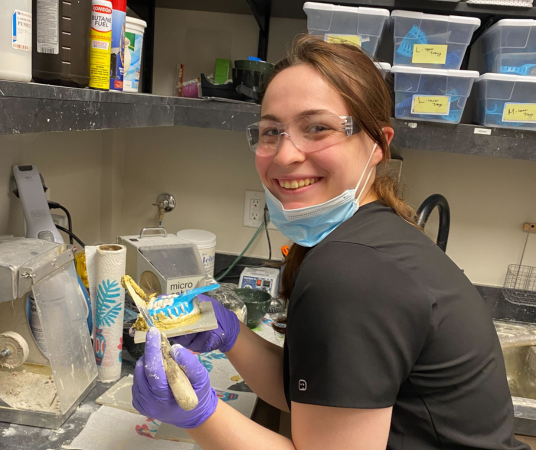
- Dental materials — mixing impressions, cements, composites, and preparing temporary restorations
- Patient preparation — seating, draping, reviewing medical histories, updating charts
Administrative duties:
- Scheduling appointments and managing patient flow
- Dental charting and electronic records documentation
- Insurance verification and basic billing
- HIPAA compliance and patient privacy
Dental assistants don’t diagnose conditions or perform irreversible procedures — that’s the dentist’s role. But they make every procedure possible by managing everything around it.
Why people look for “dental school” when they mean dental assistant training
Search engines conflate these terms constantly, and so do the people using them. Someone who says “I want to go to dental school” often means “I want to work in a dental office” — not “I want to spend a decade becoming a dentist.”
If your goal is to:
- Work in a dental office within a few months
- Earn a healthcare income without years of schooling
- Start a clinical career that’s in consistent demand
- Keep your total training cost under $3,000
…then dental assistant school is what you’re looking for — not a traditional four-year dental school.
What makes Arch Dental Assistant School different from other dental assistant schools
Not all dental assistant training programs are designed the same way. Arch Dental Assistant School is built as a hybrid program specifically designed to maximize flexibility without cutting the clinical training that the job actually requires.
10-week program — the fastest credentialed path
At 10 weeks, Arch Dental Assistant School is one of the shortest dental assistant programs available. It achieves this by removing everything that doesn’t directly prepare you for the job — no general education filler, no padded semester structure — while keeping the full clinical and administrative curriculum.
Hybrid format: online learning + in-person lab days
Online coursework (scheduled throughout the 10 weeks) covers:
- Dental anatomy and terminology
- Infection control standards and OSHA compliance
- Dental materials: theory, mixing ratios, and applications
- Radiography principles and radiation safety
- Administrative skills: charting, scheduling, insurance basics, HIPAA
- RDA exam preparation integrated throughout
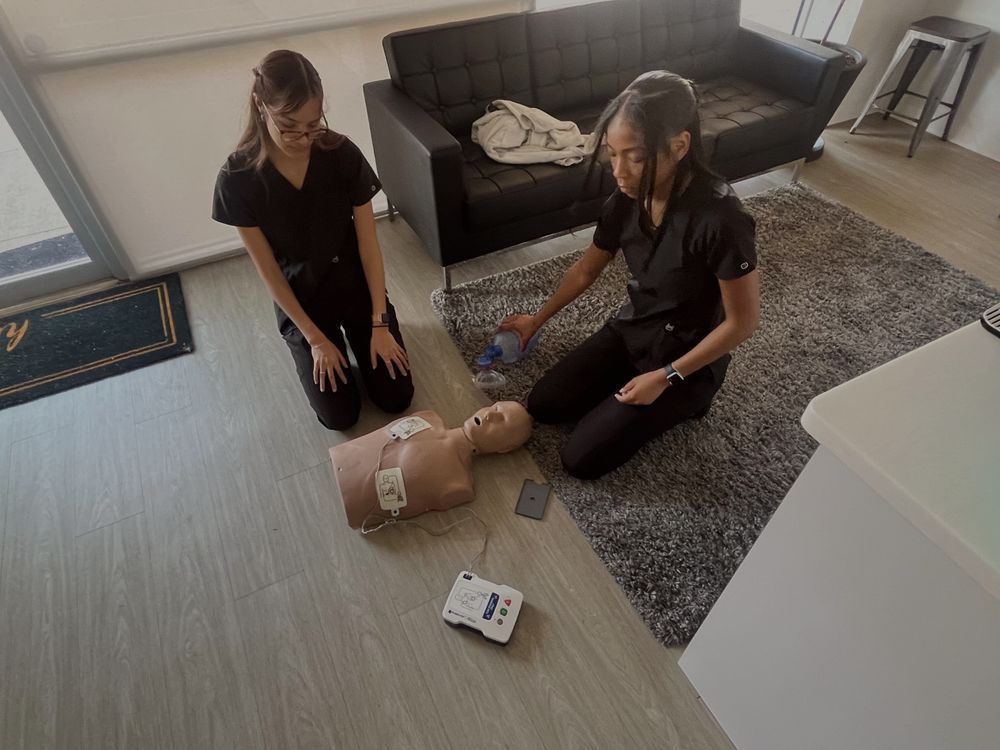
4 in-person lab days (9 hours each, scheduled over 2 weekends in weeks 4 and 8) cover:
- Chairside assisting technique: instrument passing, suction, retraction
- Dental radiography: taking bitewings, periapicals, and panoramic X-rays
- Dental materials: hands-on mixing and application
- Infection control: operatory disinfection, instrument sterilization
- Patient preparation and clinical workflow
The labs are held in real dental office environments — not classroom simulations. You practice with actual dental equipment, under direct instructor supervision, in the settings where you’ll eventually work.
RDA certification preparation included
The Registered Dental Assistant (RDA) credential and equivalent state certifications signal to employers that you’ve met a verified clinical standard. Arch Dental Assistant School prepares you for these exams as part of the curriculum — not as an add-on.
$2,490 total — no debt at graduation
Total program cost is $2,490, covering all 10 weeks of online coursework and all 4 in-person lab days. No financial aid is accepted — which means no federal student loans and no debt after graduation. Payment plans are available.
Job outlook for dental assistants
The Bureau of Labor Statistics projects 7% growth in dental assistant employment through 2032. The national median salary is $45,941 per year ($22.09/hour). Entry-level positions typically start in the $32,000–$38,000 range, with experienced assistants earning $50,000 or more.
A 10-week program at $2,490 that positions you to earn $36,000+ per year pays for itself in roughly the first month of work.
Get started with Arch Dental Assistant School
- See the full 10-week curriculum: Program details
- Cost and payment options: Tuition
- Talk to our team: Contact us
- Apply: How to apply
You're only a few months from the medical assistant career you deserve.