On the Job Training for Dental Assistants: What It Is, What It Isn't, and Better Alternatives
On the job training as a dental assistant — often called OJT — means learning dental assisting skills while working in a dental office, without completing a formal training program first. Some states allow it, and some dental offices offer it. It’s a real path into the profession, and for certain people in certain circumstances, it works.
But it also has significant limitations that most OJT descriptions leave out. Here’s an honest look at what on the job training actually involves, who it works for, who it doesn’t, and how it compares to a formal training program.
How On the Job Training Works
In an OJT arrangement, a dental office hires you with no formal dental assisting education. You learn by:
- Observing experienced dental assistants and dentists during procedures
- Gradually taking on tasks as the supervising dentist deems you ready
- Learning office-specific workflows — that particular practice’s instruments, materials, and procedures
- Self-studying for any credentialing requirements your state mandates
The pace depends entirely on the office. Some practices have structured training protocols. Many don’t. Your education depends on whoever happens to be available to teach you on any given day.
The Advantages of OJT
You earn while you learn. You’re receiving a paycheck from day one, even if it’s at a lower rate than a trained assistant would earn.
No upfront tuition cost. There’s no program fee because there’s no formal program.
Immediate employment. You skip the training phase and start working right away.
Office-specific knowledge. You learn exactly how that particular practice operates, which is valuable if you plan to stay there long-term.
The Significant Limitations of OJT
Inconsistent education quality
Your training depends entirely on who teaches you, how much time they have, and how structured the office’s approach is. Many offices simply don’t have the bandwidth to teach systematically — you pick things up as opportunities arise, which means gaps in your knowledge.
Limited clinical skill development
OJT focuses on what that office needs right now. If the practice doesn’t do many extractions, you won’t learn extraction assisting. If they use a specific radiography system, you’ll know that system but not others. Formal programs cover the complete scope of dental assisting regardless of any single office’s procedures.
No standardized curriculum
There’s no guarantee you’ll learn dental anatomy, infection control theory, radiography physics, dental materials science, or any of the knowledge-based content that underpins clinical competency. OJT teaches you how to do tasks but often not why they’re done that way — which matters when something goes wrong or when you need to adapt.
Certification challenges
Credential exams like the RDA test the full scope of dental assisting — not just what one office taught you. OJT-trained assistants often struggle with exam sections covering content their office never addressed. Some states require formal program completion before you can even sit for the exam.
Lower starting pay
OJT dental assistants typically start at lower wages because they’re being trained rather than contributing immediately. The pay gap between OJT hires and program-trained hires can persist for years.
Limited career mobility
If you leave the office that trained you, your skills may not transfer cleanly. Different offices use different instruments, materials, and workflows. Without a formal education foundation, adapting to a new practice is harder.
How OJT Compares to a Formal Program
| Factor | On the Job Training | 10-Week Program (Arch) |
|---|---|---|
| Cost | No tuition (but lower wages) | $2,490 with payment plans |
| Time to start earning | Immediate | ~3 months |
| Curriculum breadth | Office-specific only | Complete scope of dental assisting |
| Clinical skill consistency | Variable | Standardized and verified |
| Certification readiness | Often incomplete | RDA exam prep integrated |
| Starting salary | Lower ($13–$16/hr typical) | Higher ($16–$19/hr typical) |
| Career mobility | Limited | Strong |
When OJT Makes Sense
On the job training can be a reasonable choice if:
- You have a guaranteed position at a specific dental office that offers structured OJT
- Your state allows dental assistants to work without formal training or certification
- You plan to stay at that office long-term and don’t need broad career mobility
- You genuinely cannot invest any money in training, even with payment plans
When a Formal Program Makes More Sense
A formal training program is the stronger choice if:
- You want certification (RDA or equivalent) that opens doors across the profession
- You want to learn the complete scope of dental assisting, not just one office’s needs
- You want higher starting pay from day one of employment
- You want the flexibility to work at any dental office, not just the one that trained you
- You want to be competitive in a job market where more employers are requiring credentials
- You can invest 10 weeks and $2,490 for significantly better long-term outcomes
The 10-Week Alternative at Arch Dental Assistant School
Arch’s program covers the full scope of dental assisting in 10 weeks:
- Online sessions: Live, instructor-led classes covering dental science, anatomy, materials, infection control, administrative skills, and RDA exam preparation
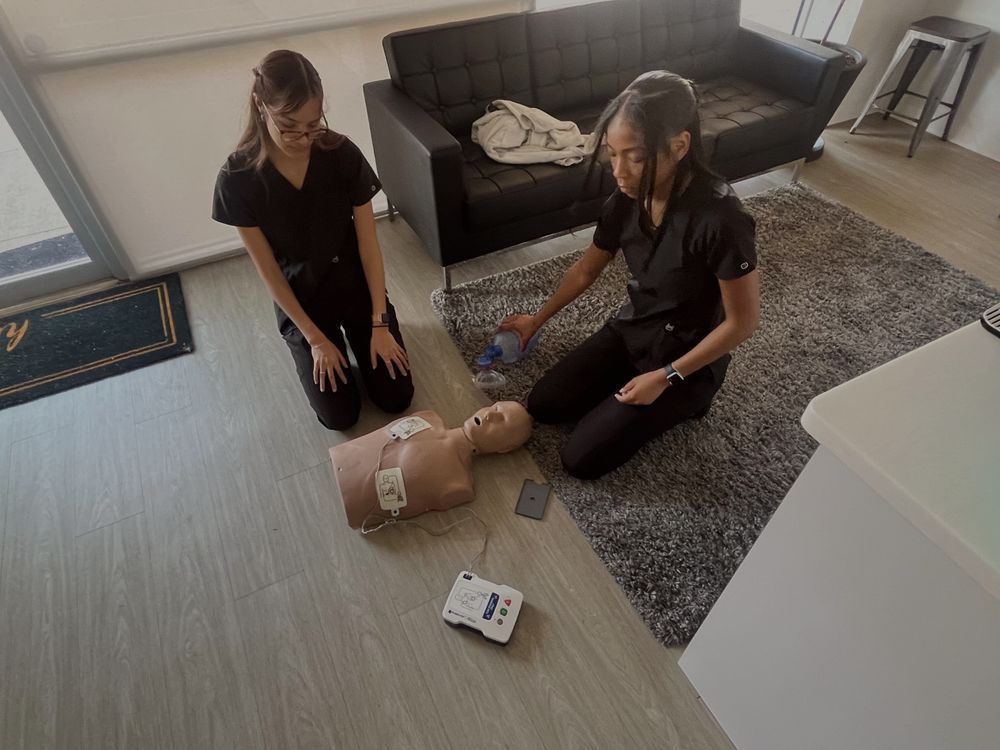
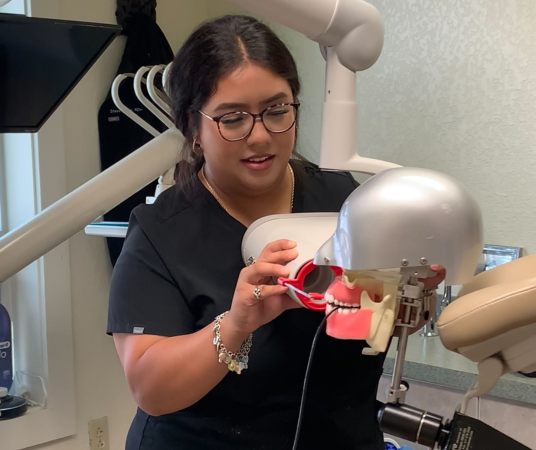
- In-person labs: 4 intensive lab days across 2 weekends — hands-on practice with instruments, radiography, materials, and sterilization
- Tuition: $2,490 with weekly payment plans. No student loans. Graduate debt-free.
- Outcome: RDA exam readiness, complete clinical and administrative competency, career support
The investment: $2,490 and 10 weeks. The return: a career with a national median salary of $46,540/year (BLS) and 7% projected growth through 2033.
Ready to Start?
- See the full program: Program details
- Review tuition and payment plans: Tuition
- Talk to our team: Contact
- Apply: How to apply
You're only a few months from the medical assistant career you deserve.